

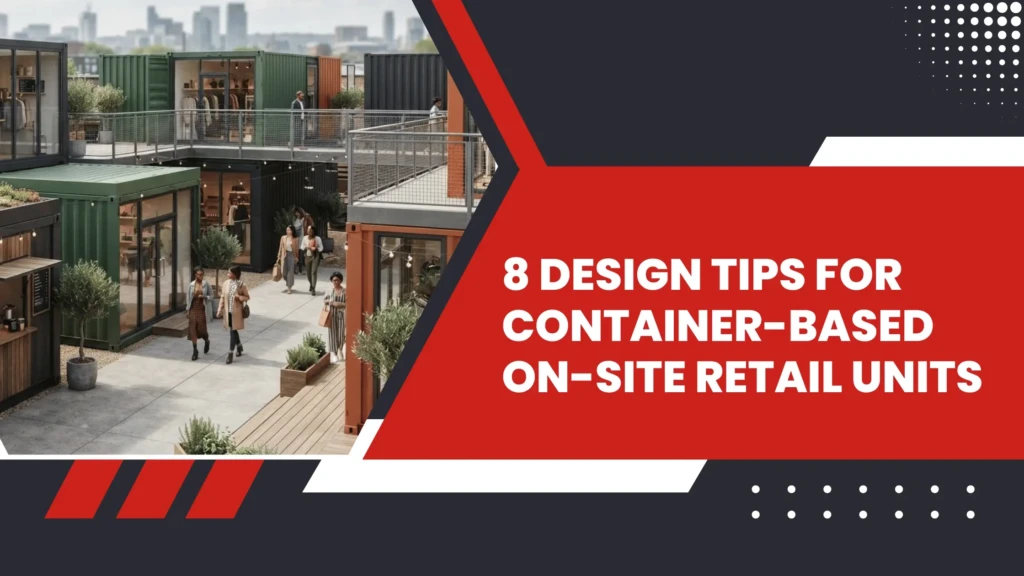
The UAE is a desert region. But what makes it so charming and lively? Mostly, it’s the mix of luxurious spaces, ranging from iconic skyscrapers to small retail shops. Whenever you want to enjoy good food, shop for something, or simply explore a little more, you’ll likely come across a few portacabin setups.
Sometimes, the container business retail doesn’t even look like containers, and the credit goes to good design. Do you have an idea in mind for such a retail space in the UAE?
Well, we have some amazing design tips for you.
8 On-Site Retail Unit Design Ideas
The idea of design doesn’t start with decorations and aesthetics but with safety, convenience, and a plan.
So, some of the design ideas that every retail store must have are:
1. Start With the Right Container Grade
Not every used shipping container is suitable for retail use. Ask your supplier for the history of the container, whether it transported food-grade or hazardous cargo, and how much rust or structural damage it has. Most of the container manufacturing companies in the UAE now offer purpose-built units rather than re-purposed cargo boxes, which means cleaner walls, better floor bases, and fewer surprises when fitting out.
If you’re dealing with modified containers in the UAE, check the welding quality on any cut-outs made for doors or windows. A bad cut undermines the frame and invites leaks. Good retail shop design in shipping containers starts here, not at the paint stage.
2. Plan for the Heat before You Plan for the Look
A steel box left in the sun will be an oven within an hour. Here, insulation is a must. It’s the difference between a shop people stay in and a shop they just walk straight out of.
Alternatives to consider:
- Spray foam for wall and roof cavities
- Reflective roof coatings to reduce radiant heat
- The air gap between the inner lining and the outer shell is ventilated
- Any glass frontage with double glazing or tinted windows
Do this right first, then move on to the finishes.
3. Build in Fire Safety from Day One
Fire Safety in PortaCabins is not a bolt-on once the shop is built. Retail units often have flammable stock, electrical fittings and food equipment in a confined metal space, so the layout needs clear exit paths, fire-rated insulation wherever possible, smoke detectors and an accessible extinguisher near the till.
Civil Defence approval in the UAE usually tests for exactly these points, so it is more cost-effective to design for them from the start than to retrofit them later.
4. Design the Shopfront to Actually Stop Foot Traffic
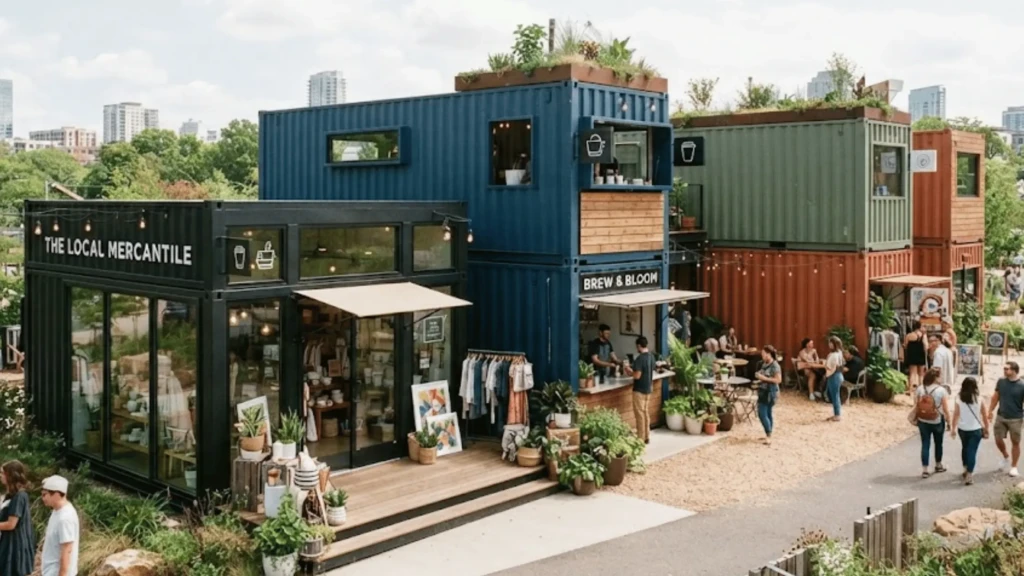
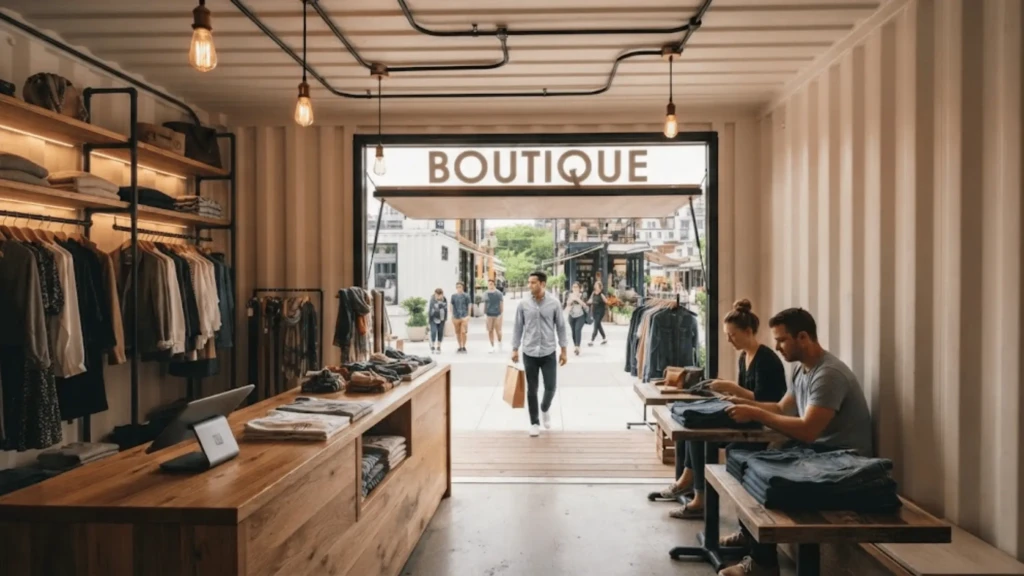
Unless the front says otherwise, a container looks like a container. A good shipping container shop design will often open up an entire side, with folding hatch windows, a glass shopfront, or a rolled-up shutter that turns the whole wall into a counter.
This is where on-site retail units draw people in or are walked by. Add signage visible from a distance, not just up close, and lighting that works after dark if the unit runs into the evening.
5. Keep the Layout Modular, so the Shop can Grow
A real advantage of container-based retail units is the ability to stack and connect. Design the interior layout so you can add a second or third container later without having to gut what you already built: shared plumbing runs, door openings that line up, and a floor plan that isn’t locked into a single fixed size.
For businesses that plan to scale, Modular retail units for businesses should be designed with connection points in mind from the beginning, not as isolated boxes.
6. Add Power and Sustainability Features that Actually Reduce Running Costs
Running air conditioning and lighting off a diesel generator quickly adds up over a few months on-site. Solar-powered portacabins with roof-mounted panels and battery storage can meet a large proportion of daytime demand, especially for lighting, fans, and POS systems.
That’s what most sustainable container retail spaces are built around, along with proper insulation and LED fittings – lower running costs, not just a green label on the signage.
7. Think Pop-up Before You Commit to Permanent
If the retail spot is seasonal, tied to an event, or testing a new location, then a portable container pop-up shop makes more sense than a fixed build. These units can be delivered, hooked to utilities, traded in days, and then moved when the season is done.
Pop-up shop containers in the UAE are a fixture in markets, festivals, beach clubs, and construction site canteens, as the fit-out is simple enough to strip back and reuse elsewhere.
8. Check the Numbers Before You Build
Even a container shop needs a proper budget, just like any physical building. Get quotations from several portacabin manufacturers in the UAE and see what’s included.
Insulation, electrical wiring, plumbing, and fire fittings may not be included in the base price. If the retail spot is short-term, portacabin rental options in the UAE are usually cheaper than an outright purchase.
Either way, the ROI of PortaCabins depends largely on the unit’s trading duration and the recovery of its fit-out cost relative to a traditional build.
Good ideas for on-site retail unit design usually get down to the same thing. Solve the heat, solve the safety requirements, and make the shop front look like a place worth stopping.
Conclusion
A successful shipping container retail shop design is about more than attractive finishes. It starts with choosing quality materials, planning for the UAE’s climate, ensuring fire safety, and creating a flexible layout that supports future business growth.
By combining smart design with energy-efficient features and a customer-friendly storefront, businesses can create retail spaces that are both functional and profitable.
Whether you need a temporary pop-up shop or a permanent retail unit, Emirates Portacabin delivers customized container-based solutions tailored to your business needs. Each unit is designed for durability, compliance, and long-term performance.
This helps businesses create modern retail spaces that attract customers and maximize long-term value.
FAQs
What are the benefits of using shipping containers for retail shops?
Shipping container retail shops are cost-effective, durable, and quick to install. They also offer flexible layouts that can be easily expanded or relocated.
Are container-based retail units suitable for the UAE climate?
Yes, they are suitable when properly insulated and ventilated. Reflective roofing and energy-efficient cooling also improve indoor comfort year-round.
Can shipping container retail units be customized for different businesses?
Yes, container retail units can be customized for various business types and layouts. They support a variety of storefront designs, interiors, and utility requirements with ease.