

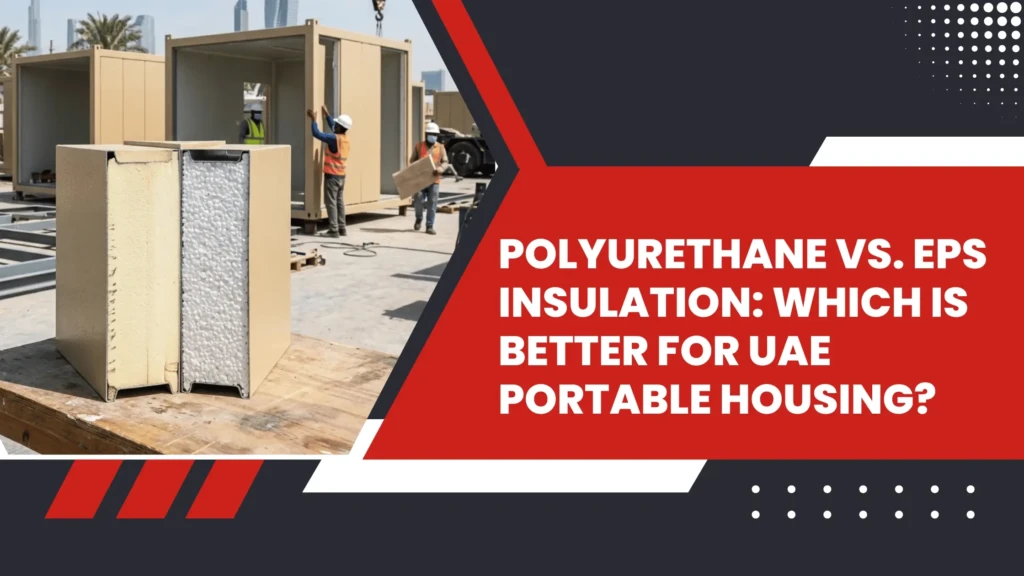
The demand for portable housing solutions in the UAE continues to grow across construction sites, labor accommodations, remote work locations, and temporary residential developments. Portacabins have become a practical choice because they are cost-effective, quick to install, and easy to relocate when project requirements change.
However, the UAE’s extreme temperatures make insulation one of the most important factors affecting comfort, energy consumption, and long-term operating costs.
Among the available insulation options, polyurethane and EPS (Expanded Polystyrene) are the two most commonly used materials in portable housing units. Especially for temporary housing units in the UAE, there are Polyurethane vs. EPS Insulation. What’s the difference, and which one suits best for housing? Let’s check out the details.
EPS Insulation: What It Is and Where It Stands
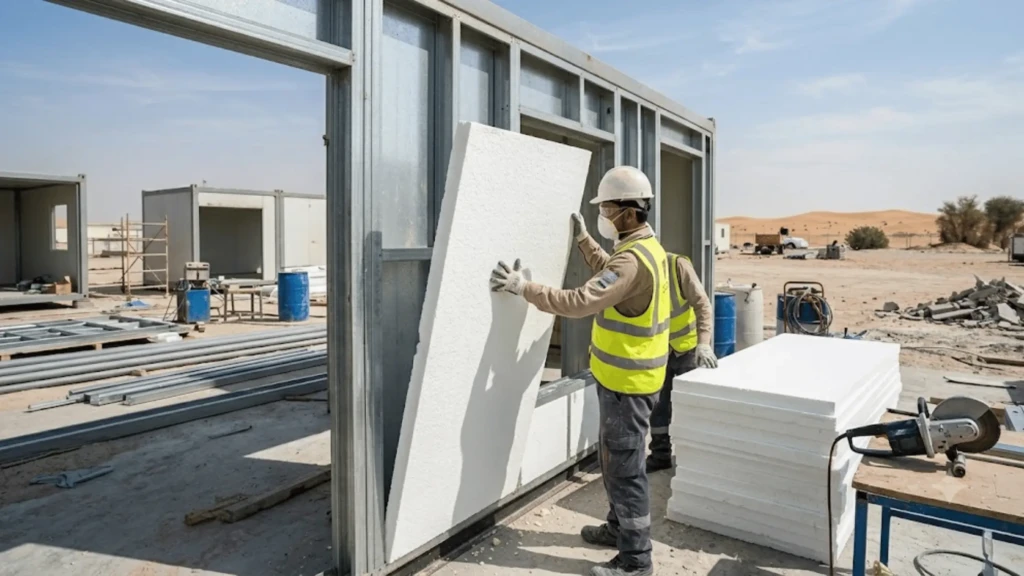
Cheap modified containers in the UAE and even some container houses in Dubai use expanded polystyrene (the white foam you see in packaging). Cheap, lightweight, easy to cut and fit.
Where EPS works:
- Low budget and short-term applications.
- Wall panels where the cost per square meter is most important.
- Dry climate, moderate temperature variation.
Where EPS fails in the UAE:
- Thermal conductivity is good enough, ~0.033-0.038 W/m.K, not strong.
- Degrades performance in humid coastal areas due to moisture absorption over time.
- It has low compressive strength and is prone to damage in high-traffic or rough-use sites.
- Separate vapor barriers are required, adding to the cost and installation time.
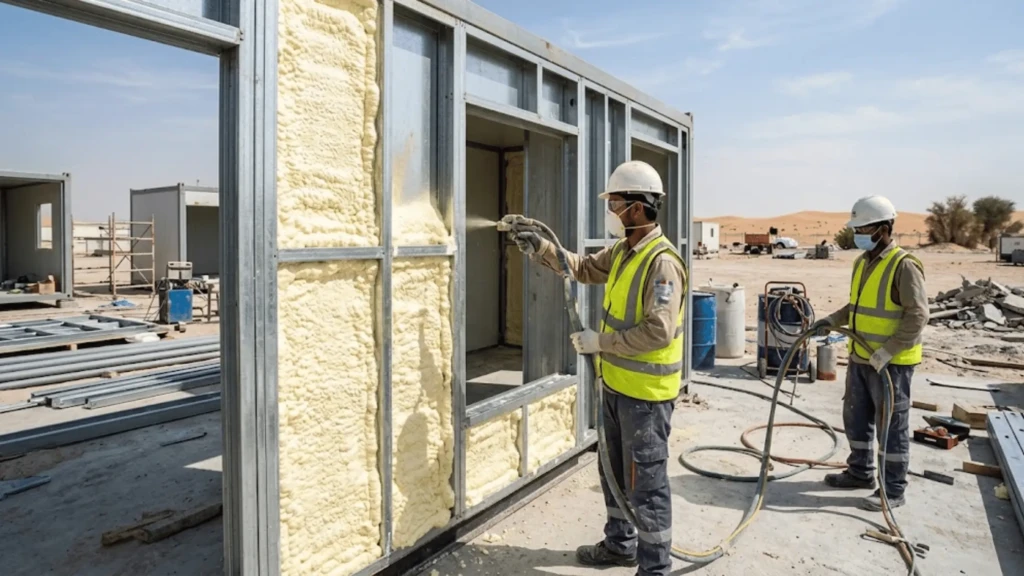
Polyurethane Insulation: What is it?
Polyurethane insulation is a rigid foam material used in walls, roofs, and panels to prevent heat transfer. It creates tiny air pockets trapped in a closed-cell structure that slows heat transfer more than most other types of insulation.
It simply keeps the inside cold and the outside heat out, and it does this more efficiently per centimetre than cheaper alternatives like EPS.
Polyurethane is more expensive initially, but it offers greater long-term value through energy savings, durability, and better performance. Some manufacturers even report equal or lower costs when including standard features (doors, windows, electrical) that EPS companies upcharge for.
Why Polyurethane Is the Clear Winner for the UAE
There are many reasons, but polyurethane insulation benefits in the UAE climate for the most part:
1.Superior Thermal Performance in Extreme Heat
If you have lived and worked in the UAE or are doing business there, you must know that the UAE temperatures can reach a maximum of 40°C (104°F). Therefore, it is important to have good insulation. Polyurethane offers an R-value of around R-6 to R-7 per inch.
This means it can offer better insulation than EPS. So, when you want solar-powered portacabins with AC installed, this insulation gives better cooling protection.
On the other hand, EPS requires thicker panels to perform like polyurethane. So, it makes things heavier and cuts down on interior space, too.
2. Critical Fire Safety Advantage
Portable homes need to comply with the building safety codes in the UAE. Polyurethane is self-extinguishing and won’t catch fire, whereas EPS can fuel a fire and give off toxic smoke. Because of this, polyurethane is definitely the safer option for portable structures where people will be living.
3. Heat Resistance Without Degradation
Polyurethane is a type of thermoset plastic that won’t melt or change shape. On the other hand, EPS starts to soften when temperatures rise above 80°C -90°C, which poses a risk during the intense summer heat in the UAE, as container surfaces can get dangerously hot.
4. Air-Tight Seal Eliminates Thermal Bridges
Polyurethane spray foam expands to fill all the little gaps, creating an airtight seal that keeps drafts out and prevents heat loss. On the other hand, EPS boards often have gaps at the seams, even when they’re taped, which can let heat in and drive up cooling costs.
Polyurethane vs. EPS Insulation: Cost Comparison
Cost Factor | Polyurethane | EPS |
Upfront material | Higher | Lower |
Installation | Professional spray needed | DIY-friendly |
Energy savings | 20–48% cooling reduction | Higher cooling demand |
Panel thickness | Thinner = more interior space | Thicker = less space |
Long-term value | Better investment | Budget option only |
Polyurethane vs. EPS Insulation for Portable Housing
To understand why polyurethane is the best insulation for portable housing in the UAE. Here is a comparison table for a 20-foot portable accommodation unit in the UAE:
Factor | EPS | Polyurethane |
Thermal conductivity (W/m·K) | 0.033–0.038 | 0.022–0.028 |
Moisture resistance | Low | High |
Panel thickness needed (for same R-value) | ~100mm | ~65mm |
Typical lifespan (UAE conditions) | 7–10 years | 15–20 years |
Relative panel cost | Lower | 20–35% higher |
Cooling cost impact | Higher running cost | Lower running cost |
Which Applications Suit Each Material?
Choose EPS if:
- The project should wrap up in under six months.
- The budget is the main limitation here.
- We’re looking at a site that’s inland, which means less humidity.
- Instead of purchasing portacabins outright, you’re opting for rentals, so the costs are shared.
Choose polyurethane if:
- This unit is suitable for year-round use or for longer-term projects.
- If you’re located in a coastal area or somewhere with high humidity.
- You’re purchasing rather than renting, and the overall cost of ownership is important.
- This unit is intended for container homes in Dubai or for worker housing, where resident comfort is part of the agreement.
What to Ask Your Portacabin Manufacturer in the UAE
Before you decide on a portable accommodation unit or buy directly from a manufacturer in the UAE, make sure to ask these important questions:
- What’s the thermal conductivity rating for the insulation?
- Are the panels made with closed-cell or open-cell foam?
- What kind of vapor barrier system do you include?
- How long can I expect the insulation to last in the coastal conditions of the UAE?
- Does the panel have a fire rating, and if so, which standard does it meet?
If a manufacturer can’t provide clear answers to these, they’re likely more focused on pricing rather than actual performance.
Conclusion
When comparing polyurethane vs. EPS insulation, polyurethane clearly delivers better performance for portable housing in the UAE due to its superior thermal efficiency, moisture resistance, fire safety, and long-term durability.
While EPS may suit short-term, budget-focused projects, polyurethane offers greater energy savings and a stronger ROI for PortaCabins over time. Whether you are working with a portacabin rental provider or planning to purchase a permanent unit, the quality of the insulation should be a key consideration.
As a trusted manufacturer and supplier of labor accommodation cabins in the UAE, Emirates Portacabin provides high-quality insulated solutions built for the region’s demanding climate. These solutions help maximize occupant comfort, improve energy efficiency, and support long-term operational performance.
FAQs
What is the difference between polyurethane and EPS insulation for portable housing?
Polyurethane offers better thermal performance and moisture resistance than EPS. It requires thinner panels and provides greater durability for long-term portable housing applications.
Which insulation material performs better in the UAE’s hot climate?
Polyurethane performs better in the UAE’s extreme temperatures due to its higher insulation value. It reduces heat transfer more effectively and lowers cooling requirements.
Is polyurethane insulation worth the higher cost compared to EPS?
Yes, polyurethane often justifies its higher initial cost through energy savings. Its longer lifespan and reduced maintenance costs improve overall value.