

A portacabin in the UAE isn’t some temporary shed you get for your setups. It is a structure you may need for many different purposes. Therefore, it needs to be a climate-engineered structure that looks simple but has every layer and every bolted corner designed for stability.
Previously, we explored the differences between portacabins and prefab buildings and also reviewed portacabin rental options in the UAE. Today, we will walk through the step-by-step manufacturing process of portacabins and how they are built for local environmental conditions.
When followed with the right procedures, these cabins can last for years to come. They can be energy-efficient and a comfortable choice for many reasons. But how do these portacabins turn out to be the most reliable choice? This is when step-by-step manufacturing comes into play. Let’s talk about it.
Steps of the Portacabin Manufacturing Process for the UAE Conditions
Portacabins offer many benefits, but what makes them truly remarkable is the rigorous preparation they undergo, especially for the UAE climate.
Here are the modular building construction steps:
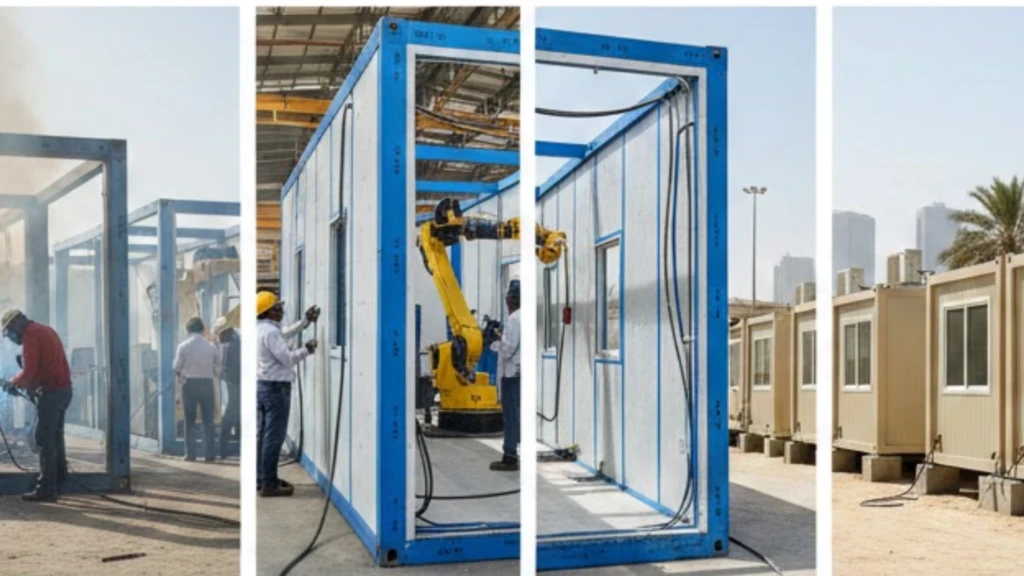
Step 1: Requirement Analysis & Site Understanding
In the answer to “How are portacabins made?” This is the 1st step. Manufacturing doesn’t begin with gear and heavy machinery; it starts with the right questions from the Portacabin manufacturer in the UAE.
For the UAE climate, manufacturers need information like:
Sandstorms, excessive heat (typically 45-50°C in summer), high UV exposure, coastal humidity, and regional regulations such as those issued by Dubai Municipality or Abu Dhabi Civil Defence.
Additionally, they specify whether it is an office, labour quarters, a site clinic, a security cabin, or a retail space. The insulation and ventilation requirements of a site office are significantly different from those of a labour camp cabin.
Everything that comes after is determined by this step, particularly the material grades, HVAC capacity, and insulation thickness.
Think of it as the intersection of architecture and climate science.
Step 2: Structural Design & Engineering
Engineers use CAD software to design the cabin structure after the requirements are clear.
For the UAE:
- Extreme temperature fluctuations can cause thermal expansion, which steel frames are made to withstand.
- Open desert locations are taken into account in wind load calculations.
- Subtle roof slopes are designed to keep water from collecting during infrequent but heavy downpours.
Since untreated steel and desert humidity are not friends, mild steel, which is frequently used, is treated and reinforced. Here, maintaining structural integrity is essential to survival.
Step 3: Base Frame & Chassis Fabrication
This is where metal really steps up as a structural material.
Portacabin suppliers in the UAE cut, weld, and put together heavy-duty steel sections to create a solid base frame. When it comes to the UAE, a few things are different:
- The steel is thicker than what you’d find in cooler areas.
- They apply anti-corrosion primers from the get-go, rather than as an afterthought.
- They monitor welding quality closely to catch any microcracks that might develop as temperatures rise.
The base frame serves as the structure’s skeleton. If it’s not right, then everything else is just for show.
Step 4: Floor System Installation
The floors in the UAE really take a beating; there’s always a lot of foot traffic, plus the heat from the ground and even sand that can sometimes get in.
You’ll usually find these key layers of modified containers in the UAE:
- Steel cross members
- Moisture-resistant cement boards or marine plywood
- High-density insulation to keep the heat from coming up
- Vinyl, anti-slip tiles, or epoxy flooring
When it comes to labor accommodation, they often throw in some extra soundproofing to help keep the noise between units down.
Step 5: Wall Panel Manufacturing & Insulation
This is definitely one of the key steps for containerised office solutions in the UAE.
Typically, the walls are made up of sandwich panels that include:
- Pre-painted galvanized iron or aluminum sheets on the outside (which are UV-resistant)
- Core insulation, like polyurethane foam (PUF), expanded polystyrene (EPS), or rock wool
- Interior boards, whether it’s cement board or gypsum, are often treated with protective coatings.
In the UAE, insulation thickness is typically increased to reduce the load on air conditioning systems. For fire-rated cabins, rock wool is typically the preferred choice. Besides, the exterior coatings are specifically selected for their ability to resist fading and absorb less heat.
Step 6: Roof Panel Assembly
Roofs for prefabricated cabin production take quite a beating in desert climates, and if you need solar-powered portacabins, this may require a bit more work. They endure the harsh sun, dust buildup, and extreme temperature fluctuations.
In the UAE, roofs are designed with a few key features:
- Outer layers that reflect a lot of sunlight to keep heat from building up
- More insulation than what’s found in the walls
- Waterproof membranes and sealed seams to keep everything dry
- Space for AC units or exhaust fans
Some companies even install false ceilings to create an air buffer zone, which helps keep indoor temperatures down.
Step 7: Electrical & Plumbing Integration
After the doors and window installation, then teh next step is plumbing. Services are installed before the walls are fully sealed.
The electrical systems are set up to handle:
- High AC loads
- Continuous use
- Compliance with local electrical codes
Wiring is concealed in conduits to protect it from heat damage. For plumbing, we use heat-resistant pipes, which are especially important for cabins that get a lot of direct sun.
This step is about ensuring everything is safe and reliable for the long term, not just about getting things running.
Step 8: HVAC System Installation
In the UAE, air conditioning isn’t just a nice-to-have; it’s essential for survival.
When manufacturers design systems, they take into account:
- The cooling load, which depends on insulation, cabin size, and the number of people in the space.
- The best spots to place split or ducted AC units are those that ensure uniform cooling throughout.
- Fresh-air ventilation to ensure indoor air doesn’t become stale.
If the HVAC setup isn’t done right, you end up with hot spots, units that struggle to keep up, and unhappy people living in those spaces.
Step 9: Interior Finishing
The cabin is now ready for living.
Inside, there are several upgrades you might consider:
- Wall finishes that are either painted or clad with materials that resist fungi
- False ceilings equipped with LED lights
- Built-in furniture, bunk beds, or workstations
- Bathrooms featuring non-slip floors and effective drainage
We select materials that can withstand heat without emitting unpleasant odours or warping; cheaper options just won’t hold up in the desert.
Step 10: Quality Checks & Transportation
Before they’re delivered, cabins are inspected for a few key things:
- Structural stability
- Electrical safety
- Fire safety in portacabins
- Tests for door and window sealing
- Quality checks on the finish
- The cabins can be shipped either as whole units or in modular sections.
When they arrive on-site, here’s what happens:
- Foundations or concrete blocks are set up
- The cabins are placed and leveled out
- Services are hooked up
- Final sealing is performed to prevent sand and heat from entering.
Also, modular cabins can be stacked or linked, but only if the original design supports it.
Conclusion
Portacabins built for UAE conditions are not basic temporary units but carefully engineered structures designed for heat, dust, and continuous use.
From requirement analysis to insulation, HVAC sizing, and final quality checks, each stage of manufacturing directly affects durability and comfort. When buyers choose the right manufacturer, the long-term ROI of portacabins improves through energy efficiency, lower maintenance, and flexible reuse.
Companies like Emirates Portacabin follow climate-focused production standards that support safe, scalable deployment. If you plan to buy a portable cabin in Dubai, understanding the manufacturing process helps you make a confident choice.
FAQs
How often should roof profile sheets be maintained in dusty climates?
Roof profile sheets should be inspected at least twice per year in dusty climates. In high-accumulation areas, quarterly cleaning and inspection help prevent buildup and corrosion.
What are the best practices for cleaning roof profile sheets in hot weather?
Use low-pressure water, a soft brush, and mild soap to clean roof sheets safely. Avoid harsh detergents and high-pressure washers that can damage coatings.
How can I prevent heat and dust damage to the roof profile sheets?
Ensure adequate roof ventilation and reflective or heat-resistant coatings to reduce thermal stress. Regular dust removal and fastener checks help prevent corrosion and structural failures.