

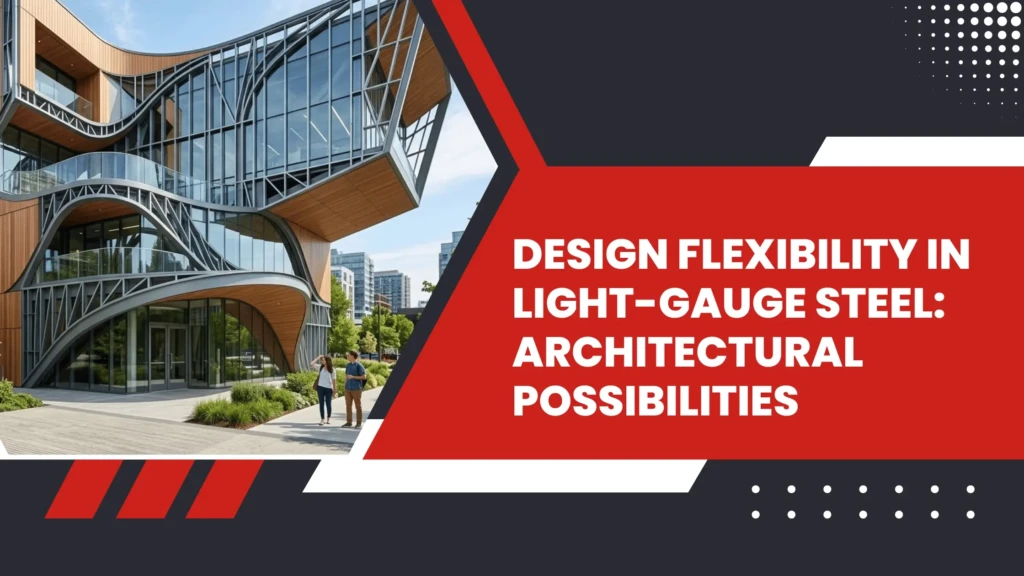
The skyscrapers don’t happen overnight, but the light-gauge steel in the scene does play a role in reducing construction time and waste.
Besides, the aesthetic appeal that captivates the public is achieved through this process, and light-gauge steel enables these architectural possibilities.
Previously, we compared light-gauge steel vs hot-rolled steel and also explored the differences between light-gauge steel and traditional construction methods to understand their practical applications in modern building projects.
Today, we will focus on another important aspect of modern construction: design flexibility in light-gauge steel and the architectural possibilities it offers.
Now, being a contractor, you might want to enter this space and know what else light gauge steel can offer in terms of design flexibility.
Let’s explore it together.
What are the Architectural Possibilities with Light-Gauge Steel Design Flexibility?
Many buildings, such as warehouses, residential buildings and temporary labour camps, are the finest examples of light-gauge steel applications. But when you are looking for rare design elements, you might want to know where to draw the line and how to maximise flexibility in design.
If you have the best light-gauge steel manufacturers by your side, the following are the flexibility options you can get:
1. You Can Frame Almost Any Shape
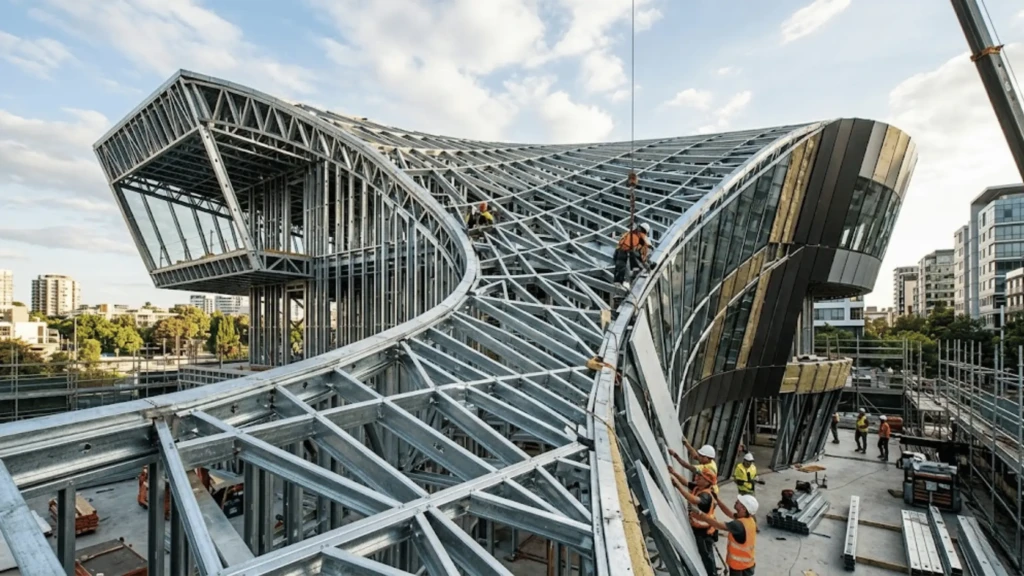
Wood wants to go straight. Molds are to be filled with concrete. LGS is bent, cut and assembled into curves, angles and irregular geometries that would be expensive or time-consuming with other materials.
Curved walls. Angled ceilings. Non-rectangular floor plans. These are all normal LGS applications – not special requests. Sections are cut in the field with a chop saw or ordered cut from the fabricator.
2. Spans Are Longer Than You’d Expect
For wall applications, an LGS stud 150 mm (6 in.) long can span 3 to 4 m unsupported. Deeper sections, 200mm or 250mm, take that further. This means less internal load-bearing walls, which means more open floor plan options for architects and fewer columns in the way for clients.
For the new contractors hiring steel structure companies in the UAE: more span = more open space = fewer walls to frame = faster build, but the structural engineer must sign off on each and every span calculation. No guessing.
3. It Works Well with Large Glazing and Curtain Walls
Yes, the cost efficiency of light-gauge is impeccable. However, the complexities of modern buildings are always manageable. For example, modern buildings are full of glass. In this case, LGS framing gives a clean attachment to heavy glazing systems because:
- The steel holds brackets and anchors nicely
- Deflection (how much the frame flexes under load) can be precisely calculated
- Sections can be designed to restrict movement to what is needed by the glass makers (typically L/360 of the span)
That’s why you see light-gauge steel building systems behind most commercial shopfronts and high-rise facades.
4. Pre-fabrication is a Real Option
You can create LGS panels using the latest widely available software, and then have them made off-site as ready-to-use wall and floor panels. When they get to the site, they’re already numbered and ready to go up.
So, what does this mean in real terms? Well, for starters:
- You won’t have to do as much cutting and measuring on-site.
- There’ll be fewer mistakes.
- Assembly will be quicker; a crew of four can put up a whole floor’s worth of walls in just one day.
- It also reduces waste, which often arises when a traditional construction style is followed.
On the other hand, if you want to make changes during the construction phase, it gets trickier after the panels are made. The design really has to be finalized before you start manufacturing.
Limitations on Light-Gauge Framing System Applications
Knowing how light-gauge steel buildings are made isn’t all you need.
You must know that LGS isn’t the best fit for every scenario, so it’s important to be honest with clients about that:
- Corrosion: LGS has a galvanized coating, but in constantly wet environments, like when it’s in direct contact with the ground or near splash zones, that coating can wear off over time. So, it’s best to keep it out of the ground and away from any standing water.
- Fire: When exposed to fire, bare steel loses its strength pretty quickly. That’s why buildings made with LGS require fire-rated cladding, usually two layers of fire-rated plasterboard to comply with safety codes. This isn’t optional, and it does add to both material and labor costs.
- Acoustics: Steel frames can transmit sound more effectively than heavier materials like concrete or brick. So, for apartments, hotels, or anywhere where noise control is important, you’ll need to use acoustic batts and pay attention to the design details.
- Thermal bridging: Steel conducts heat, so each stud running from the inside to the outside can transfer warmth out in the winter and heat in during the summer. So, achieving a good thermal break and insulation design is even more critical with LGS than with timber.
Conclusion
Design flexibility in light-gauge steel is transforming modern construction by enabling innovative shapes, longer spans, and efficient prefabrication while maintaining strength and precision. The benefits of light-gauge steel construction include reduced waste, faster installation, and adaptable applications of light-gauge framing systems across commercial and residential projects.
As a leading modular steel building manufacturer in the UAE, Emirates Portacabin supports advanced building solutions that meet evolving architectural demands.
With its versatility and efficiency, light-gauge steel continues to redefine modern design possibilities for contractors and developers across the construction industry.
FAQs
What is design flexibility in light-gauge steel construction?
Design flexibility in light-gauge steel construction refers to the ability to create a range of architectural shapes and layouts. It allows faster, more efficient, and adaptable building designs.
Where is light-gauge steel commonly used in building projects?
Light-gauge steel is commonly used in warehouses, modular buildings, residential homes, and commercial structures. It is ideal for both temporary and permanent construction projects.
Why is light-gauge steel preferred over traditional materials?
Light-gauge steel is preferred due to its strength, speed of installation, and design flexibility. It also significantly reduces construction waste and improves project efficiency.