

Before you realize the corrosion is damaging your roof sheet, it may already be spoiled. The rust doesn’t start from above the surface but underneath. This is why you need corrosion-resistant techniques when installing the roof profile sheets.
Previously, we conducted a cost analysis of roof profile sheets in the UAE and shared a detailed roof sheet installation guide to help you understand pricing factors and the correct installation process.
Today, we will take a deep dive into corrosion-resistance techniques used in roof profile sheet manufacturing and explore how advanced coatings and protective methods improve the durability and lifespan of roofing systems.
But what kind of techniques can be used, and what should you know about them?
If you want your roof to last more than 20 years rather than needing repairs every 5 years, make sure you understand and have your vendor apply the best techniques.
How does Steel Become Roofing Material?
Roof profile sheets or house roofing sheets begin life as a flat steel coil, which is then rolled and pressed into the wave or trapezoidal shape you see on a finished roof. Bare steel offers very little protection from moisture or salt air, so every step after it leaves the rolling mill is about protecting it. The first line of defense is a metal coating applied before the sheet is shaped, followed by paint systems.
How do Roof Profile Sheets Resist Corrosion: Top Techniques
There are many coating techniques, but people don’t understand which coating is best for roof sheets in harsh weather.
Here are the metal roof protection methods and how they help:
1. Galvanization: The First Line of Defense
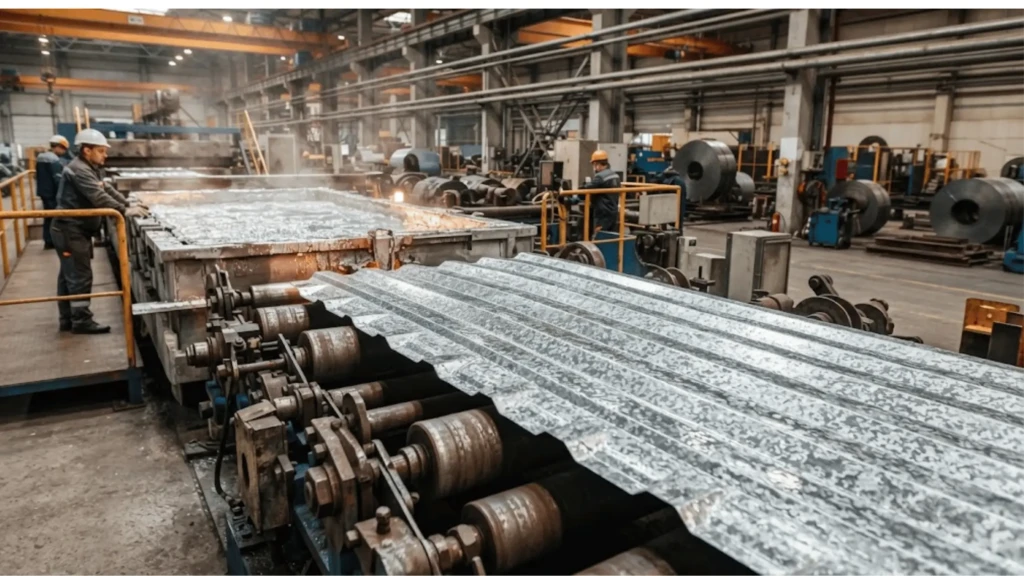
Galvanized roofing sheets are steel sheets coated with zinc. This is usually done through a hot-dip process in which the steel is immersed in a bath of molten zinc. Zinc protects steel in two ways: it serves as a protective barrier to prevent water and oxygen from reaching the steel surface, and it acts as a sacrificial coating. If the coating is scratched, the zinc will corrode before the steel beneath it does, because zinc is more reactive.
A standard galvanized roofing sheet (usually marked Z275 or similar) is fine in dry inland areas but has real limitations along the coast, where salt accelerates zinc loss. This is one reason manufacturers have developed alloy coatings that outperform plain zinc.
2. Zinc-aluminum and Aluminum-zinc Alloy Coatings
Coatings like Galvalume combine the barrier properties of aluminum with the sacrificial protection of zinc. Aluminum corrodes by forming a stable oxide layer on its surface, while zinc will still protect any exposed steel at cut edges.
Independent testing has consistently shown that these alloy coatings last 2 to 4 times longer than pure zinc coatings in salt spray conditions. This is important for buyers comparing roof sheet coating types for coastal or humid areas.
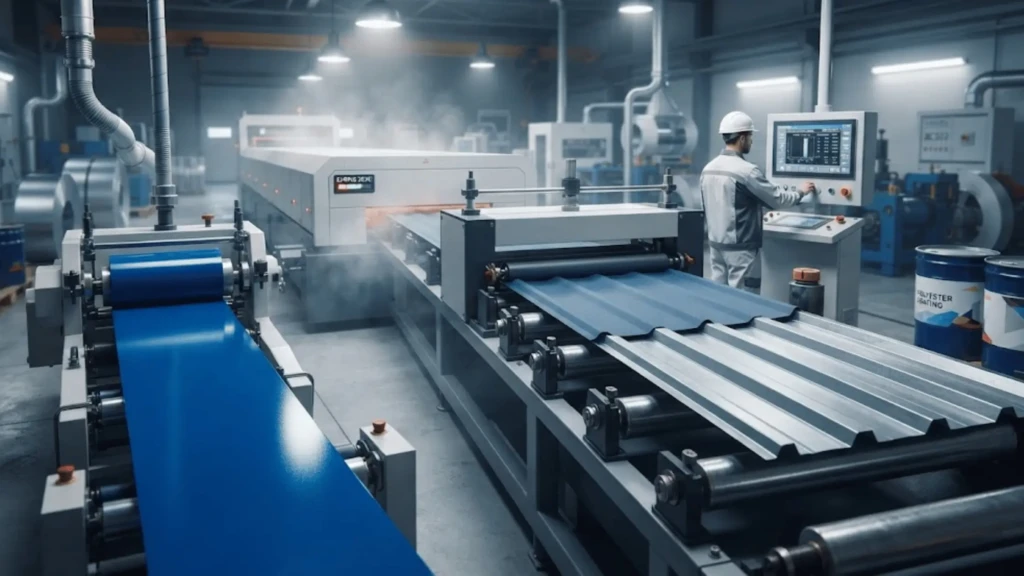
3. Paint and Polymer Coatings on Top
Most roof sheets are coated with a second layer after the metallic coating: paint or a polymer film. Here is where the types of roof sheet coating differ the most:
- Polyester (PE) Coatings: Low cost, decent UV resistance, suitable for general residential and light commercial use.
- Silicone-Modified Polyester (SMP): Improved heat and UV performance, used on industrial roofs.
- PVDF (Polyvinylidene Fluoride) Coatings: The most durable option, retaining color and gloss for 15-20 years, even in strong sunlight.
- Plastisol Coatings: thick layer of PVC-based material with good resistance to scratches and impact; often used in areas with debris or foot traffic.
PVDF over an aluminum-zinc base is usually the best coating for roof sheets in extreme climates and is especially good in harsh weather, as it resists both UV breakdown and salt corrosion.
4. Edge and Fastener Protection
How are roof profile sheets corrosion-resistant in the most vulnerable areas?
Cut edges and screw holes expose bare steel. This is where corrosion-resistance techniques matter most in practice.
Roofing sheet suppliers in the UAE are addressing this by:
- Factory-cut edges limit exposed steel, prepainted coil.
- Installation of zinc-rich edge sealants at roof profile sheets.
- Fasteners are coated and rubber-washered to prevent water pooling around screw points.
- Overlap the sheet profile to direct water away from the joints instead of letting it accumulate.
Where This Matters Most
When it comes to corrosion-resistance techniques, the importance can really vary based on the type of building. Roof profile sheets for industrial buildings often face challenges such as chemical exposure and steam, in addition to the usual weather conditions.
This is why specifiers tend to opt for heavier zinc coatings and thicker paint films compared to what you’d find on a typical house.
Unlike traditional roofing materials such as clay tiles or bitumen shingles, roof profile sheets depend almost entirely on their coating system for durability. Also, because the base steel offers no inherent resistance.
Maintenance tips for roof profile sheets are simple and stem from how the coatings function:
- Regularly rinse off any salt and dust accumulation
- Inspect fastener points for any signs of coating wear
- Address scratches before they expose the bare steel for too long.
The effectiveness of roof sheets in protecting a building hinges on the integrity of this coating system, which is precisely why manufacturers put so much effort into perfecting it during production instead of relying on repairs down the line.
Conclusion
Choosing the right roof profile sheet is essential for long-term building protection, especially in harsh climates where moisture, salt, and UV exposure can accelerate damage.
Understanding corrosion-resistance techniques helps buyers select suitable coatings and materials based on their project needs. From galvanized options to advanced corrugated metal sheets, every choice plays a role in durability and performance.
Emirates Portacabin, a trusted roofing sheet supplier in the UAE, provides high-quality roofing solutions for various applications.
By understanding the types of roofing sheets and the role of roof sheets, businesses can make informed decisions to build stronger, longer-lasting structures.
FAQs
What are the main corrosion resistance techniques used in roof profile sheets?
Common techniques include galvanization, aluminum-zinc alloy coatings, paint systems, and edge protection methods. These solutions prevent moisture exposure and extend the durability of roofing sheets.
Which coating is most effective for preventing rust in roofing sheets?
PVDF coatings over aluminum-zinc bases offer excellent rust protection in harsh environments. They provide strong resistance against UV rays, salt, and weather damage
How long do corrosion-resistant roof profile sheets last in harsh climates?
High-quality corrosion-resistant roof sheets can last over 20 years with proper coatings and maintenance. Lifespan depends on climate conditions, material quality, and installation practices.