

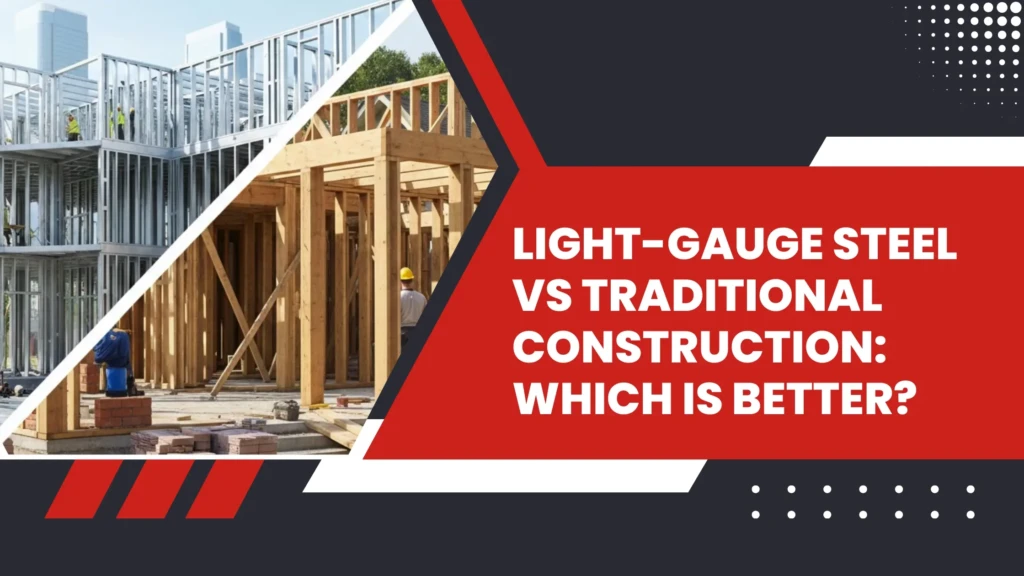
When you are considering the most durable construction material, the two most common choices are light-gauge steel and traditional methods. The sound of the latest technologies is much better. But is it also better for the kind of project you are trying to build?
Previously, we explored myths about light-gauge steel and the differences between light-gauge steel and hot-rolled steel. Today, we will discuss which option to choose between light-gauge steel and traditional construction.
So, you must get the basics right when comparing light-gauge steel and traditional construction. Once you understand the details, you can make better decisions.
Let’s explore the topic further to improve your understanding.
How Traditional Construction Differ From Light Gauge Steel?
Both have their own benefits and phases, but they work differently for each project type. Here are the major differences to consider when you are thinking about it:
1. Approach
Consider this a comparison of two building philosophies rather than merely two materials.
Construction using Light Gauge Steel (LGS) is an industrial process that prioritizes accuracy, often guided by experienced light-gauge steel manufacturers.
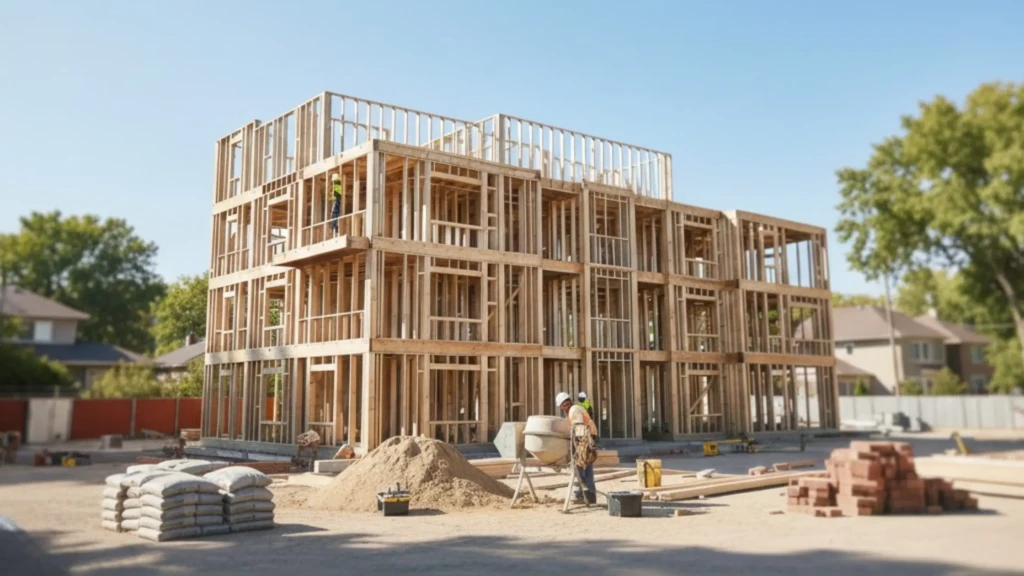
Craftsmanship, mass, and local material logic have shaped traditional construction, which typically consists of reinforced concrete with masonry. Each shines under various circumstances.
2. Material Usage
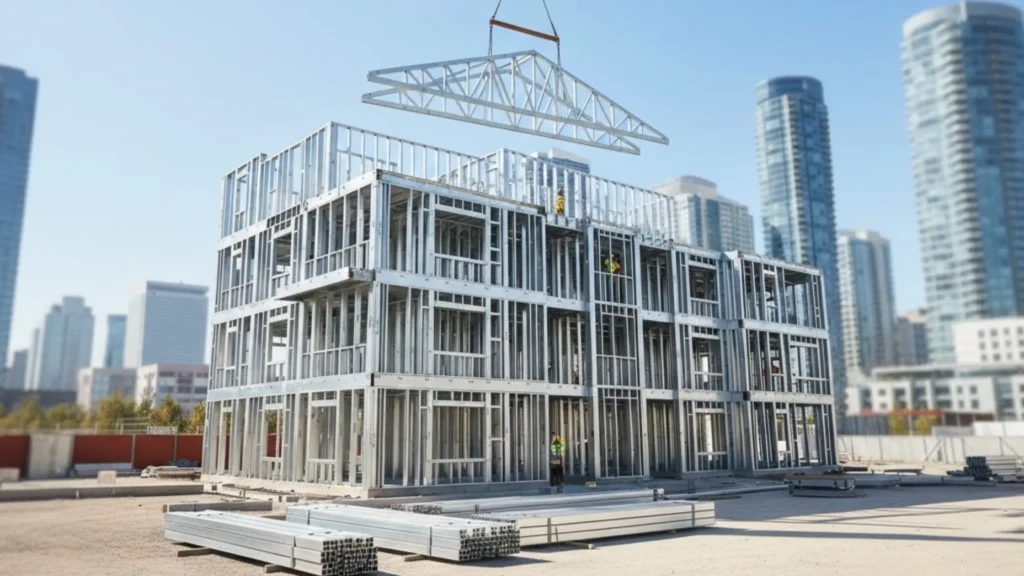
Like a very serious Meccano set, Light Gauge Steel is made from thin, cold-formed steel sections, produced in factories and assembled on site. Projects proceed quickly because everything is pre-engineered. Quick wall construction, strict tolerances, and minimal material waste are all present.
Steel is attractive in climates where heat, humidity, or pests are constant enemies because it doesn’t warp, shrink, or attract termites. Because lighter buildings are subject to less seismic force, LGS is structurally robust for its weight and performs well in seismic zones. The applications of light-gauge steel are extensive, ranging from residential and commercial buildings to modular and industrial structures.
Concrete, bricks, and blocks, materials with significant compressive strength and thermal mass, are used in traditional construction. Because these buildings are solid, they have a solid feel. In some climates, concrete can help stabilize indoor temperatures by absorbing heat during the day and releasing it gradually.
Because contractors all over the world are very familiar with this approach, labor is readily available, and there is a high degree of design flexibility on the job site.
Do you want to alter a wall while it’s being built? Compared to factory-cut steel frames, traditional methods are much more forgiving of improvisation.
3. Trade-offs
Using a light-gauge steel building system requires careful planning. Once fabrication begins, making changes to the design later can be costly or even impossible. Additionally, you need skilled designers and precision in manufacturing; if work is done carelessly, you lose out on the benefits it offers.
When it comes to acoustics and thermal insulation, you have to engineer those elements thoughtfully because steel can conduct heat and sound a lot better than masonry unless it’s insulated properly.
On the other hand, traditional construction is often pretty slow. Concrete needs time to cure, and wet trades can drag things out even further. There’s usually more material waste, and quality can vary significantly depending on who’s doing the work.
Over the years, long-term issues such as cracks and moisture intrusion can manifest quietly. And don’t forget about sustainability: cement production is a major contributor to global CO₂ emissions.
So Which is “Better”?
If you consider the light-gauge steel construction benefits, they are more than any traditional construction. In terms of speed, accuracy, scalability, and sustainability, Light Gauge Steel often outperforms other materials, particularly for homes, schools, commercial spaces, and modular builds.
But for custom designs, handling heavy loads, working with local contractors, or projects where changes may arise during construction, traditional methods still have their merits.
However, there is still a catch to this concept, as it ultimately depends on the type of building you need.
How should we decide on it?
Here’s a quick way to think about it before you think less of any benefits of using light-gauge steel:
- Light Gauge Steel is all about engineering, while traditional construction leans more toward craftsmanship.
- Neither approach is the clear winner.
- What’s better really depends on factors like the climate, the size of the project, timelines, skill levels of the labor force, sustainability goals, and whether you prefer predictability or some flexibility.
If you take a step back, it’s not just about the materials. It’s more about whether you want buildings that are put together like precise materials or ones that come together gradually from the ground up. Ultimately, you may need to discuss your requirements with steel structure companies in the UAE.
Conclusion
Choosing between light-gauge steel vs traditional construction depends on your project’s priorities, including speed, accuracy, and sustainability.
Working with a trusted modular steel building manufacturer in the UAE, like Emirates Portacabin, ensures high-quality fabrication, predictable costs, and efficient assembly.
Light-gauge steel excels in fast construction, minimal waste, and seismic resilience, while traditional methods offer flexibility for custom designs and heavy-load applications.
By understanding your project requirements, site conditions, and long-term goals, you can select the method that best balances efficiency, durability, and cost, ensuring a reliable, safe, and sustainable building solution for years to come.
FAQs
What is the difference between light-gauge steel and traditional construction?
Light-gauge steel uses factory-cut, cold-formed steel for precise assembly, while traditional construction relies on concrete, bricks, and masonry. Each offers distinct structural and design benefits.
Is light-gauge steel construction better than traditional methods?
It depends on the project’s needs. Light-gauge steel excels in speed, accuracy, and sustainability, while traditional construction provides flexibility for custom designs and heavy loads.
Which construction method is more cost-effective, light-gauge steel or traditional construction?
Light-gauge steel often reduces labor, material waste, and construction time. Traditional methods may save costs for small-scale or highly customized projects.