

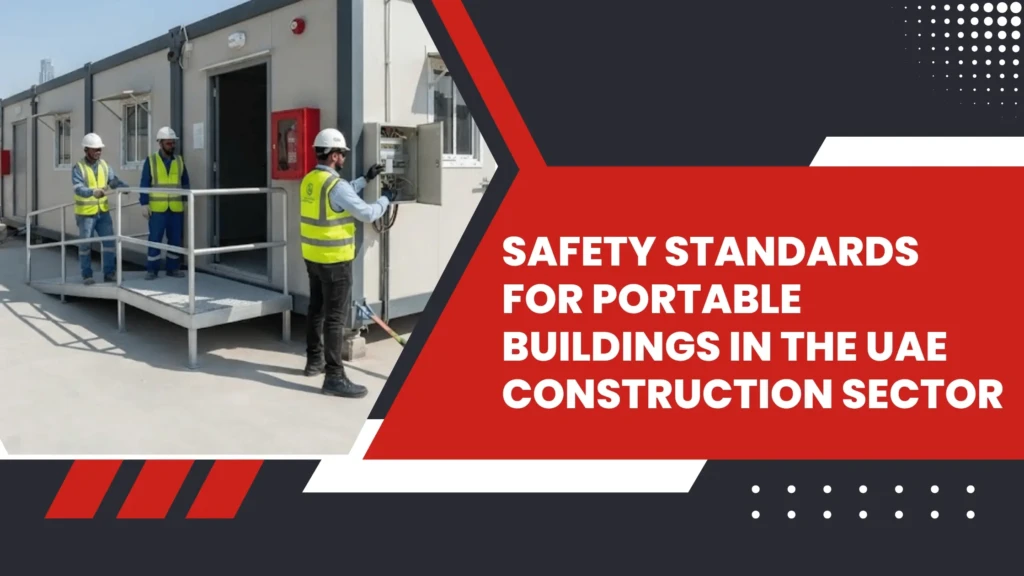
Portable buildings in the UAE look different from typical buildings. However, these buildings are still considered important spaces that require proper safety measures.
Previously, we explored why modular construction is gaining popularity and discussed the environmental impact of modular and portable buildings. Today, we’ll look at another equally important aspect, safety standards for portable buildings in the UAE construction sector.
Since portacabins are also in increasing demand, it is important that they are built to proper safety standards. Which brings us to the question: what are the safety standards for portable buildings in the UAE?
Most of the rules are set by Civil Defense and the Ministry of Human Resources (MOHRE). But what these UAE construction safety regulations for portable buildings include is yet to be discussed in this article.
Who Regulates Safety Compliance?
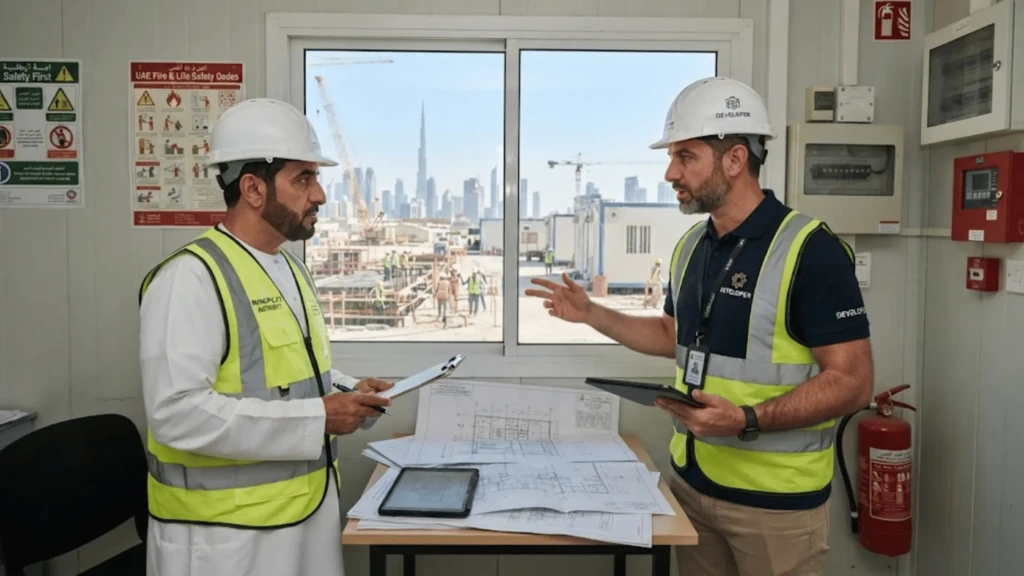
In the UAE, approval for Fire and Life Safety for portable buildings is issued by Dubai Civil Defense, Abu Dhabi Civil Defense, and their counterparts in other emirates.
Buildings must comply with the UAE Fire and Life Safety Code of Practice, which specifies minimum requirements for materials, detection systems and evacuation routes, prior to the issuance of a Certificate of Completion.
No unit can be connected to water or power, or occupied, without that certificate.
Where the structure houses workers, a second layer of rules applies. Labour accommodation, including many portable accommodation units, shall be in accordance with Cabinet Resolution No. 13 of 2009, Ministerial Decree No. 212 of 2014 and the more recent Administrative Decision No. 19 of 2023 on Occupational Safety and Health and Labour Accommodation.
These instruments set minimum room dimensions, ventilation requirements and site location criteria, and registration through MOHRE’s Labour Accommodation System is mandatory.
Top Safety Measures that Portable Buildings in the UAE Must Have
When it comes to the safety of portacabins, they are treated the same as any other building. So, standards are pretty much the same.
Here is what you need to watch out for when setting up a portable building:
1. Foundation and Installation Safety
A portable building is only as safe as the surface it stands on. Even though these structures are prefabricated, they must be installed on a properly prepared foundation that can safely support their weight and withstand environmental conditions.
Key installation requirements include:
- A level and stable foundation designed for the site’s soil conditions.
- Secure anchoring systems to improve wind resistance.
- Proper drainage around the building to prevent water accumulation.
- Installation carried out in accordance with the manufacturer’s engineering specifications.
- Final inspection to verify structural stability before occupancy.
Incorrect installation can affect the building’s structural performance, reduce its lifespan, and increase safety risks. Working with an experienced modular building supplier helps ensure every installation meets UAE safety and engineering standards.
2. Fire Safety Requirements
The main danger Civil Defense inspectors look for is fire, since many older portacabins were built with sandwich panels, which are flammable. Existing regulations state:
- Fire-rated wall, floor, and ceiling assemblies, typically rated A-30, A-60, or A-120, depending on occupancy and stacking
- Smoke and heat detectors are linked to the Hassantuk monitoring system, linked to the Civil Defense operation rooms
- Illuminated exit signs and emergency escape route lighting
- Portable fire extinguishers on the evacuation routes, and fire-water tanks and hydrants in the larger camps
- A secondary escape route for any upper floor above the internal staircase in stacked or multi-story arrangements
Each unit must have a formal fire risk assessment before occupation, including electrical faults, cooking equipment, and combustible storage.
3. Structural and Material Standards
The third pillar of portable building safety standards in the UAE is structural integrity.
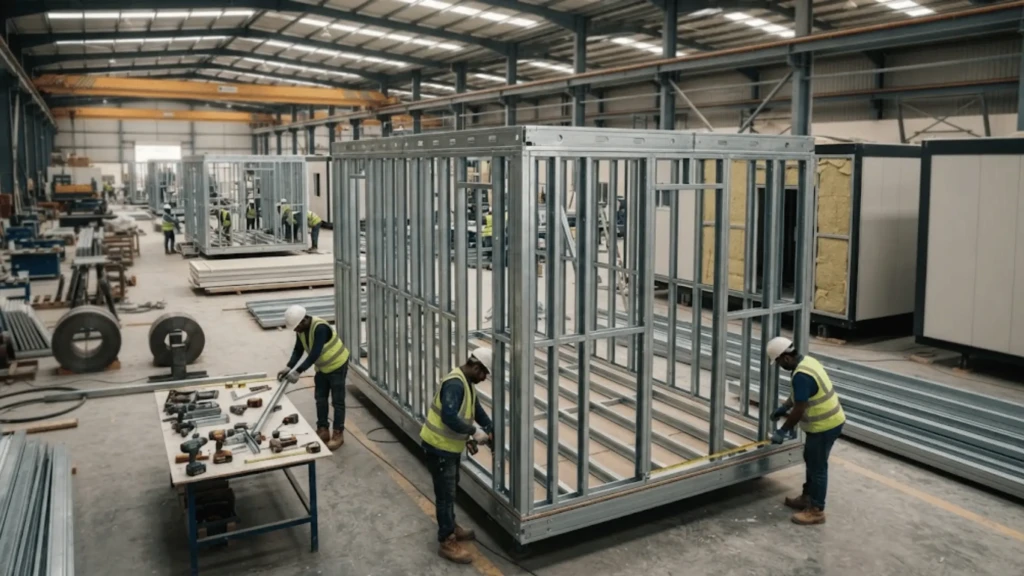
In most modern units, the support is a light-gauge steel frame, and the quality of that frame will determine how the structure will perform under wind loading, fire exposure, and repeated movement.
Buyers must ensure that a modular steel building manufacturer in the UAE can provide design calculations and material certificates, not just a visual inspection.
The modular building safety requirements UAE developers now specify as standard:
- Cover the frame,
- The panel system and the wiring together,
- Not any one component in isolation.
The key material and structural checks are:
- Fire-rated wall panels with rockwool or glasswool insulation rather than untested foam cores.
- Fire Resistance Certified galvanized steel doors & frames.
- Insulated, properly rated electrical wiring, because faulty wiring is a leading cause of cabin fires.
- Wind and load calculations appropriate to the site’s exposure category, especially for coastal and desert sites.
Partnering with a well-known portacabin manufacturer or a leading steel structure company in the UAE can help reduce the risk of receiving a unit that appears compliant yet lacks the required engineering documentation. The same applies to steel frame construction companies that provide multi-story site offices, where floor loading and stair egress are subject to Civil Defense review.
Worker Accommodation and Modified Containers: Basic Standards to Remember
A significant portion of the demand for portable buildings in the UAE is driven by the need for labour housing.
According to MOHRE standards, each worker requires at least 3 square meters of floor space, a minimum bedroom ceiling height of 7 feet, and the use of non-flammable materials throughout the construction.
Additionally, new labour accommodations must be located at least 5 kilometers from family residential areas and within close proximity to an active transport network.
Modified Containers in the UAE are a popular choice for this purpose. These repurposed shipping containers can be equipped with fire-rated insulation, proper ventilation, and washrooms, all at a lower cost than traditional cabins.
However, it’s important to note that container conversions must still obtain the same Civil Defense approval as any other building.
If a container skips fire-rated cladding or lacks proper electrical certification, it will fail inspection, no matter how it was initially constructed.
Conclusion
Meeting portable cabin safety standards in the UAE is essential for protecting occupants and ensuring regulatory compliance. From fire-rated materials and structural integrity to proper ventilation and electrical systems, every portable building must satisfy Civil Defense and MOHRE requirements.
Choosing experienced light-gauge steel manufacturers and trusted suppliers helps ensure your project meets all necessary safety standards.
Emirates Portacabin delivers high-quality modular buildings and portacabin offices designed with compliance, durability, and functionality in mind.
By prioritizing certified materials and professional engineering, businesses can create safe, efficient, and long-lasting portable building solutions for construction sites and commercial applications.
FAQs
What safety standards apply to portable buildings in the UAE?
Portable buildings must comply with Civil Defense and MOHRE regulations before occupancy. These standards cover fire safety, structural integrity, ventilation, and emergency evacuation requirements.
Do modular buildings require Civil Defense approval in the UAE?
Yes, all modular buildings must receive Civil Defense approval before they can be occupied. Compliance includes certified materials, fire protection systems, and safe electrical installations.
Are modified shipping containers subject to the same safety regulations?
Yes, modified shipping containers must meet the same safety requirements as other portable buildings. They require approved insulation, electrical systems, and fire safety measures before use.