

In recent years, we have seen our lives revolve around making changes and shifting to environmentally friendly solutions. The material used in construction might be the major thing that industries need to discuss.
Then, light-gauge steel is everyone’s favorite; therefore, you have to consider whether it has a positive environmental impact.
Previously, we compared light-gauge steel vs hot-rolled steel and explored the advantages of light-gauge steel design flexibility in modern construction projects. These topics highlighted how light-gauge steel offers versatility, efficiency, and practical benefits across a wide range of applications.
Today, we will take a closer look at the environmental impact of light-gauge steel and examine whether this increasingly popular construction material is truly a sustainable choice for the future.
So, let us help you understand the environmental benefits and sustainability of light-gauge steel framing systems.
What is Light-Gauge Steel?
LGS is cold-formed steel, typically 0.8-3mm thick, in the form of C-sections, Z-sections, and tracks, produced at room temperature rather than by hot rolling.
According to the Steel Framing Industry Association, parts are pre-assembled off-site in a controlled factory environment and shipped ready to install, cutting framing time by 50% compared to traditional methods.
How Light-Gauge Steel Buildings Are Made?
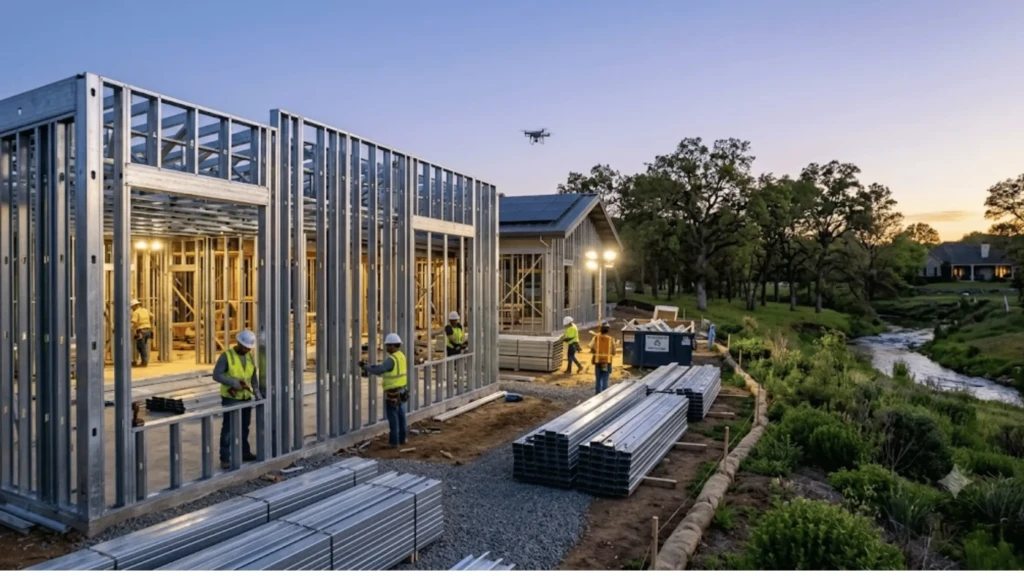
From an environmental perspective, how light-gauge steel buildings are made matters just as much as the materials themselves. Factory fabrication enables clean cuts, precise manufacturing, minimal offcuts, and close to zero site waste.
From an environmental perspective, the process itself counts: factory fabrication means clean cuts, minimal offcuts, and close to zero site waste.
LGS fabrication produces less waste, often less than 2%, whereas traditional materials tend to have offcuts, and disposal costs pile up.
Environmental Impact of Light-Gauge Steel
Here is how light-gauge steel impacts the environment in every possible good way:
1. Easy to Recycle
The most frequently cited environmental benefit of steel is its recyclability, and the data support this. Steel is 100% recyclable and can be recycled into the same material of the same quality, time and again.
This circular loop works well in practice. Steel is the most recycled material in North America by volume, with over 80% of it recycled, more than paper, aluminum, glass, and plastic combined. For construction, in particular, the recycling rate of steel is 74%. It is used in general construction, including the use of scrap cold-formed steel studs.
LGS has a clear advantage over concrete at the end of life. Structural members and light-gauge steel can be unbolted fairly easily, but concrete reinforcement steel requires a concrete crusher. That difference in the cost of dismantling affects how much material is actually recovered, and how much goes to landfill.
When Designed Correctly, the Gains are Significant
As for the Carbon footprint of light-gauge steel structures, you must follow the right process. Compared with conventional brickwork, well-insulated LGS walls conduct less heat, and less energy is required to erect a modular LGS building compared to a traditionally built structure.
2. Reduced Construction Waste
Light-gauge steel is produced using highly precise cold-forming technology, which ensures exact material usage with minimal over-ordering and waste.
Unlike traditional construction materials that often require extensive on-site cutting and adjustments, LGS components are manufactured to precise specifications in advance.
This significantly reduces construction waste, lowers raw material consumption, and improves overall resource efficiency throughout the building process.
3. Lower Transportation and Structural Load Impact
Because light-gauge steel is significantly lighter than conventional building materials, it reduces transportation emissions and fuel consumption during delivery.
The lighter structural weight also reduces the load on foundations, leading to smaller concrete requirements and a lower overall carbon footprint at the base-building level. This creates a ripple effect of environmental savings across the entire construction lifecycle.
Is Light-Gauge Steel an Eco-Friendly Building Material?
Yes. There’s just one key thing to keep in mind: the design needs to tackle thermal bridging. Steel is a great conductor of heat. If you don’t include proper thermal breaks and continuous insulation, an LGS wall can really hurt a building’s energy efficiency. It can turn a sustainable structure into an energy hog in the winter and a heat trap in the summer.
The solution is pretty clear:
- Continuous insulation on the exterior is the go-to fix; you’ve got to make sure there are no gaps in the thermal break.
- It’s crucial to do thermal modeling early on in the design process, not as an afterthought.
- When thermal breaks are done right, LGS can actually be 5 to 6 times more energy efficient than concrete for heat insulation in a typical room under similar conditions.
So to answer the question of whether light-gauge steel is eco-friendly: yes, as long as it’s detailed properly.
The Cost Efficiency of Light-Gauge Steel
Cost savings and environmental effects are more intertwined than they might seem:
- Using less material leads to lower disposal costs and less strain on landfills.
- Quicker construction means reduced fuel use for equipment throughout the project.
- Building lighter structures allows for smaller foundations, which means less concrete and a smaller carbon footprint in terms of materials.
- A long service life with minimal maintenance translates into fewer replacements over the years, reducing material use.
When construction moves faster, financing costs drop, and you can start using the space sooner, which boosts cash flow and return on investment. So, both the environmental and financial sides are clearly aligned.
Environmental Benefits of Light-Gauge Steel Construction
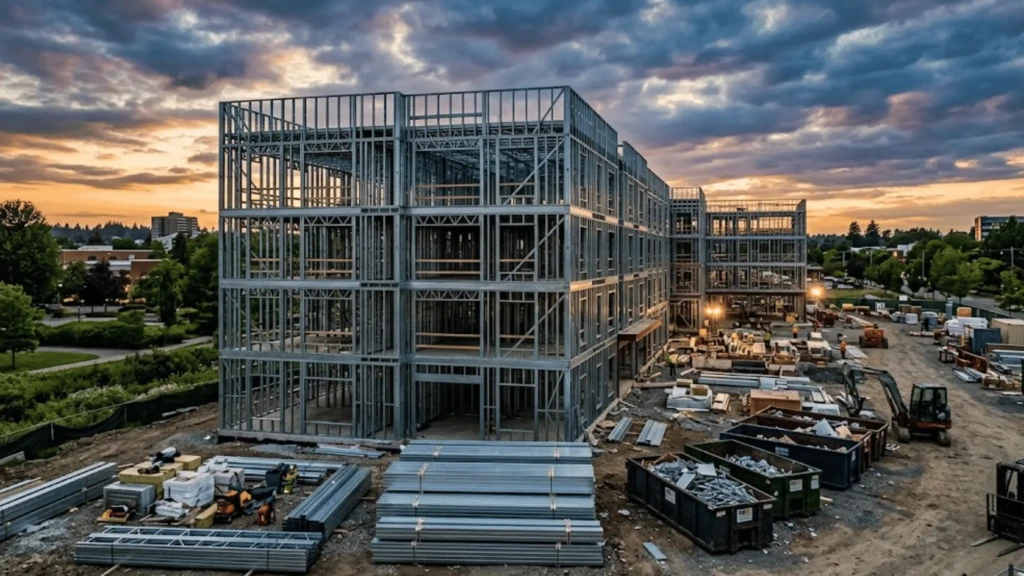
Light-gauge steel building systems offer significant environmental benefits.
Here’s a quick rundown of what the evidence really backs up:
- Waste Reduction: Using factory prefabrication keeps construction waste below 2%.
- LEED Compatibility: LGS helps developers earn LEED points, making it easier to meet those green building standards.
- Lighter Foundations: Modular LGS construction is lighter than traditional masonry, which means smaller foundations and less concrete is needed.
- Closed-loop Material Cycle: Steel scraps from one building are turned into framing for the next.
- Net-zero Potential: A 2024 UK study of an LGSF modular home reported an Energy Use Intensity of just 10 kWh/sqm/year, exceeding the nearly-zero energy targets, and achieved net-zero operational carbon thanks to its fabric efficiency, airtightness, and solar integration.
Light-gauge steel looks great for the environment on paper and stands up to examination, if the sourcing is clear, the thermal details are handled right, and the material is actually appropriate for the project. Honestly, those three conditions aren’t that complex. They just need some thoughtful choices instead of going with the usual options. Just do it right.
Conclusion
Light-gauge steel has proven itself to be a practical and sustainable construction material thanks to its recyclability, reduced waste generation, and energy-efficient building performance. Many myths about light-gauge steel stem from outdated assumptions, but modern manufacturing and design practices continue to demonstrate its environmental advantages.
The growing applications of light-gauge steel across residential, commercial, and modular construction further highlight its versatility.
When sourced from reputable light-gauge steel manufacturers, the material delivers long-term value and sustainability benefits.
Companies like Emirates Portacabin, a leading modular steel building manufacturer in the UAE, supply high-quality light-gauge steel solutions. They support durable, efficient, and environmentally responsible construction projects across the UAE.
FAQs
How does light-gauge steel impact the environment compared to traditional materials?
Light-gauge steel generates less construction waste and is highly recyclable. Its lightweight nature also reduces material consumption, transportation emissions, and foundation requirements.
Is light-gauge steel a sustainable choice for modern construction projects?
Yes, light-gauge steel supports sustainable construction through recyclability and efficient material usage. Proper insulation and design further improve long-term energy performance.
Can light-gauge steel structures be recycled or reused after demolition?
Yes, light-gauge steel components can often be reused or fully recycled after demolition. This helps reduce landfill waste and supports a circular construction economy.