

The UAE’s climate is unpredictable, and therefore, you need to choose the roof sheets carefully. The one with the ability to face intense heat, high UV exposure, and occasional sandstorms.
In our previous blogs, we explored the role of roof sheets in improving energy efficiency and also shared some maintenance tips for roof profile sheets to help extend their lifespan.
Today, we will focus on the types of roof profile sheets commonly available in the UAE market. When it comes to roofing solutions, whether commercial or residential, you need to check the types of roof profile sheets.
The features a sheet must have are durability, thermal efficiency, and structural integrity. If you don’t know what sheets are available, you might end up choosing the wrong one. So, here is what you need to know about the top 5 roof sheets available.
Top 5 Types of Roof Profile Sheets to Buy in the UAE
Your roof needs protection and also the right look for the roof, so what sheets you need, here are the best 5:
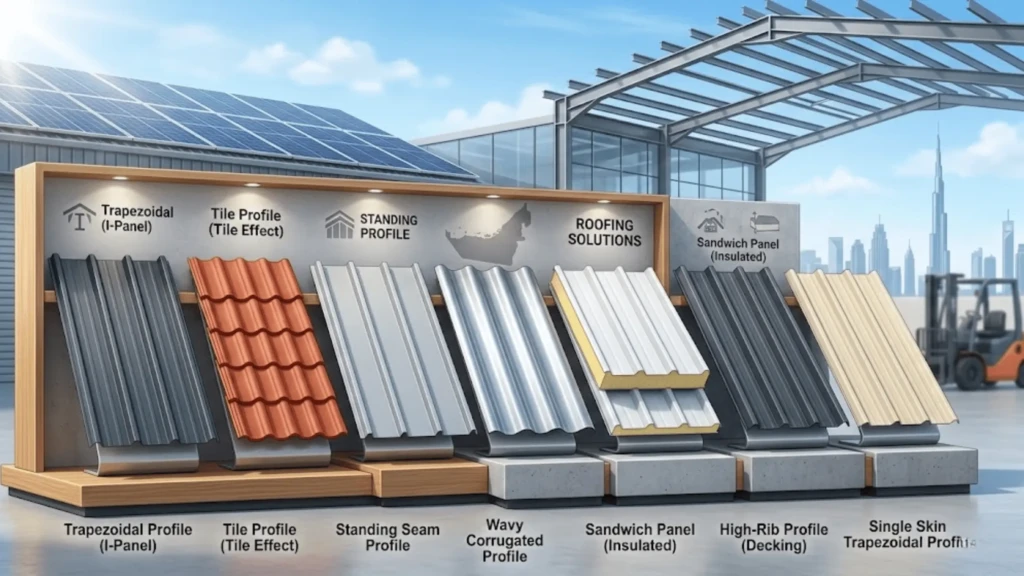
1. Corrugated Roof Profile Sheets
In the UAE, corrugated sheets are among the most well-known and widely used roof profile sheets. The repeated wave-like pattern on these sheets increases structural rigidity without appreciably adding weight. The sheet’s strength-to-weight ratio is improved by the corrugated design, making it suitable for a range of applications.
Key benefits of these sheets are:
- Due to the wave profile, it is both lightweight and structurally robust.
- Excellent water runoff because of the corrugations’ inherent slope
- For UAE conditions, available in coated, aluminum, and galvanized steel versions
- Low labor costs due to its ease of transportation and installation
- Corrugated sheet suppliers in the United Arab Emirates offer corrosion-resistant options.
Corrugated sheet suppliers in the United Arab Emirates offer corrosion-resistant options.
These sheets remain one of the most cost-effective roofing solutions for warehouses, sheds, and industrial buildings.
2. Standing Seam Roof Profile Sheets
Standing seam sheets are a high-end roofing choice that is becoming increasingly common in UAE commercial and upscale residential developments. Standing seam panels have raised interlocking seams that run vertically along the length of the roof, in contrast to corrugated metal sheets. These hidden fastener systems offer outstanding weather resistance along with a sleek, contemporary appearance.
Compared with Corrugated, standing seam roof profile sheets for industrial buildings perform better over time, particularly in climates like the UAE.
Standing seam systems have the following benefits:
- Potential leakage points are eliminated because there are no exposed fasteners.
- High resistance to thermal expansion is essential during the summers in the United Arab Emirates, when temperatures can rise above 48°C.
- Longer lifespan than the majority of other roof profile sheet types
- Compliant with systems for installing solar panels
- Perfect for high-end commercial and institutional buildings with sloped roofs
Because of their durability and sleek design, standing seam roofs are widely used in premium architectural projects. They also require less maintenance over time, making them a long-term investment for commercial buildings.
3. Trapezoidal / Box Profile Roof Sheets
In the UAE, trapezoidal or box-profile sheets are considered among the most efficient roof sheets in terms of structural efficiency. With their flat tops and angled sides, these sheets create a trapezoidal shape and can handle heavier loads better than corrugated options.
These types of roof sheets play a crucial role, especially in industrial settings and large commercial buildings.
Trapezoidal sheets’ benefits are:
- The ability to span further means we can reduce the need for extra structural support.
- These come with thermal insulation cores, perfect for keeping things at the right temperature.
- They’re really tough against wind uplift, which is key for areas along the coast in the UAE.
- They work well with both screw and clip installation methods.
Their structural strength makes them a reliable option for factories, warehouses, and logistics facilities. They are also compatible with modern insulation and cladding systems used in large-scale construction projects.
4. Sandwich Panel Roof Sheets (Insulated Roof Panels)
Sandwich panels are among the most advanced roof profile sheets available today. As the name implies, they’re made up of two metal outer layers surrounding a solid insulating core, which is usually polyurethane (PUR), polyisocyanurate (PIR), or even mineral wool. In the super-hot conditions of the UAE, these insulated panels play a key role in keeping things cool.
They’re also a top choice for factories that carry out sensitive manufacturing processes.
Here are some standout features of sandwich panel roof sheets:
- Great thermal insulation (with U-values as low as 0.15 W/m²K)
- Options that resist fire, especially those with mineral wool cores
- Quicker to install than traditional insulation systems
- Clean inner surfaces are ideal for food processing and pharmaceutical use
- Combines structure and insulation in one go.
These panels significantly improve energy efficiency by reducing indoor heat gain.
They are widely used in cold storage facilities, manufacturing plants, and temperature-controlled environments.
5. Glazed & Polycarbonate Roof Profile Sheets
Not every roof profile sheet is made from metal. In fact, glazed or polycarbonate sheets are becoming quite popular in the UAE, especially where getting natural light in is important. These see-through or semi-transparent sheets work great with metal roofing systems, as they let in just the right amount of daylight, helping cut down on daytime electric lighting.
You’ll find these sheets used in places like atria, warehouses, sports halls, retail centres, and factory roofs.
Uses and benefits are:
- Natural daylight means lower electricity bills for big commercial and industrial buildings.
- They come in UV-resistant versions, which is a must for coping with the UAE’s intense sun.
- Polycarbonate types are tough and won’t shatter, offering great impact resistance.
- They fit well with corrugated sheets and trapezoidal profiles, making installation a breeze.
- Multi-wall polycarbonate options also give you better insulation.
These roofing sheets help create bright and energy-efficient interior spaces. They are ideal for structures where both durability and natural lighting are important design requirements.
Conclusion
Selecting the right roofing material is essential for durability, energy efficiency, and long-term performance in the UAE’s demanding climate. From corrugated sheets to insulated sandwich panels, understanding the types of roof profile sheets helps businesses and homeowners make informed decisions.
Whether you are looking for house roofing sheets for residential buildings or the best roof profile sheet for factories, choosing quality materials ensures better protection and efficiency. Working with a trusted roofing sheets supplier in the UAE also guarantees reliable products and professional guidance.
Companies like Emirates Portacabin provide a range of roofing solutions designed to meet the structural and environmental requirements of modern buildings.
FAQs
What are the different types of roof profile sheets available in the UAE?
Common types include corrugated sheets, standing seam panels, trapezoidal sheets, insulated sandwich panels, and polycarbonate sheets. Each type offers unique benefits for residential, commercial, and industrial roofing needs.
Which roof profile sheet is best for industrial buildings in the UAE?
Sandwich panels and trapezoidal sheets are often considered the best for industrial buildings. They provide strong structural support, thermal insulation, and durability in harsh weather conditions.
How do I choose the right roof profile sheets for a warehouse or factory?
Choose sheets based on load capacity, insulation needs, and climate resistance. Consulting a reliable supplier helps ensure the roofing system suits the building’s structure and operational requirements.