

Protecting buildings in the UAE isn’t just about structural strategies. Even when it is finished, it has to withstand extreme weather, coastal humidity, rot, and occasional rain and sandstorms. Besides, climate change is now also affecting it harshly.
Keeping all weather changes in mind, one has to consider the maintenance of light-gauge steel structures. When comparing light-gauge steel with traditional construction, yes, LGS does have a quality that helps prevent termite damage, but it still needs maintenance in other areas.
Previously, we explored the environmental benefits of light-gauge steel construction and discussed its various applications across residential, commercial, and modular projects. Today, we’ll share essential tips and best practices for maintaining light-gauge steel structures to help improve their durability, performance, and long-term value.
So, how to maintain light-gauge steel structures?
Before you answer this for yourself, let’s go through this brief guide on essential tips for it. You can then make your own personal checklist.
Top Maintenance Requirements For Light-Gauge Steel Structures
If you don’t want your building to fall into the flaws and faults, know the best light-gauge steel maintenance tips shared by a leading steel structure company in the UAE
below:
1. Check Twice a Year, Not Once
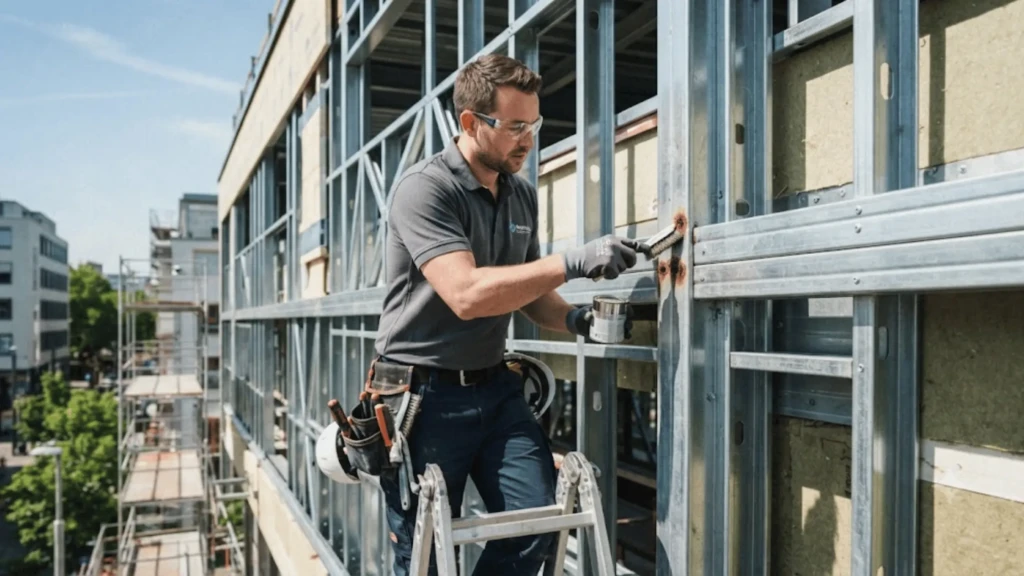
The light-gauge steel building system has its own environmental benefits. Yet, always check it before and after your wet season. At each visit, look for:
- Rust streaking at seams and joints
- Peeling or blistering paint.
- White powder residue on galvanized surfaces (generally just zinc flaking off, not automatic structural failure, but a sign you should investigate further).
- Any distortion, sag, or misalignment of the frame.
Add a five-year detailed check to the routine visual pass – use a gauge to measure coating thickness at welds and connections, rather than eyeballing it – as those points are most likely to have lost protection during fabrication.
2. Watch Where Different Metals Touch
This is the mistake that ages a frame the fastest, and it rarely makes its way onto general checklists of light-gauge steel structure maintenance. Galvanic corrosion is when two different metals touch each other, and there is moisture in between them. Weathering causes the zinc to corrode faster than it normally would. Usual suspects:
- Copper guttering or flashing in contact with galvanized studs
- Aluminum trim or fasteners in direct contact with steel
- Treated timber bridging onto the frame and chemicals leaking in damp spots
Ten years of plain rain will hurt less than a copper gutter bracket in two wet seasons. Do not let dissimilar metals touch each other, or use a rubber or plastic barrier strip. This one habit stops more corrosion than any coating upgrade.
3. Look for the Damage You Can’t See
Everyone looks outside. Steel can corrode from the inside if the vapor barrier is not doing its job and condensation forms inside the wall cavity, with warm indoor air meeting a cold steel frame. Years later, when drywall comes off, you’ll see it. You have to check for this:
- You open up a wall for any work, not just when there’s a visible problem
- Line up routinely in humid climates
- Be aware of buildings with a history of moisture or leaks
4. Match the Coating to the Site, Not the Catalog
Coastal jobs and inland warehouses don’t need the same kind of protection, and many maintenance plans fail in this explicit way from the start. ISO 12944 defines environments from C1 (dry interior) to C5 (coastal or industrial, heavy salt exposure).
For the coatings, you must know:
- Inland, Dry Climate: normal G60 galvanized coating is usually sufficient
- Coastal or Industrial, High Salt/Pollution: G90 or a zinc-aluminum coating is the safer bet
- It’s Uncertain: Ask the supplier what the corrosivity category is before the frame ships, not after it’s up
Here, too, the light-gauge steel manufacturers differ more than one would expect. For example, a steel building manufacturer in the UAE that builds modular buildings will usually specify coatings designed for heat and low humidity rather than salt spray.
However, these specifications may not suit every project location. That’s why it’s important to check that the supplier’s default assumptions match your actual site conditions.
The same applies when you compare steel structure companies more generally.
5. Skip the Harsh Cleaning
Don’t power-wash galvanized surfaces aggressively or use abrasive pads; you can strip the zinc layer, which defeats the purpose of galvanizing in the first place. To remove dirt and salt build-up, use a mild soap and water without damaging the coating.
Why It's Worth the Discipline
If you understand how light-gauge steel buildings are made, it is easy to make a list. Besides, when you stack it up against traditional construction, this maintenance gig is a lot simpler:
- Timber requires treatment for pests and rot.
- Concrete needs regular checks for cracks and rebar corrosion.
- Light-gauge steel mostly just needs its coating protected and its cavities kept dry.
This is where the cost-efficiency of light-gauge steel really shines: a properly specified and well-galvanized frame can last 50 years or more before it needs any major maintenance.
Skipping those biannual checks to save a little time now often leads to a much bigger bill down the road, whether it’s for residential framing, commercial infill walls, or modular builds.
The best part? You don’t need fancy equipment or a huge budget. What you do need is a solid schedule, a way to keep track of your findings, and someone who can spot that rust before it becomes a quick five-minute fix.
Conclusion
Maintaining light-gauge steel structures is all about consistency. Regular inspections, proper cleaning, moisture control, and the use of the right protective coatings can significantly extend the life of your building while preserving its performance.
These simple practices help you maximize the benefits of light-gauge steel construction and take full advantage of its light-gauge steel design flexibility.
Whether you’re planning a residential, commercial, or modular project, partnering with a trusted modular steel building manufacturer in the UAE is essential.
Emirates Portacabin delivers durable, high-quality steel solutions designed for the UAE’s demanding climate, ensuring long-lasting performance and reliable structural integrity.
FAQs
How often should light-gauge steel structures be inspected?
Inspect light-gauge steel structures at least twice a year. Conduct additional inspections after severe weather or if signs of moisture or corrosion appear.
Can light-gauge steel structures rust over time?
Yes, steel can corrode if protective coatings become damaged or moisture accumulates. Regular maintenance and timely repairs help prevent long-term corrosion issues.
Are light-gauge steel buildings suitable for the UAE climate?
Yes, they perform well when designed for local environmental conditions. Proper coatings and routine maintenance ensure durability in heat, humidity, and coastal environments.