

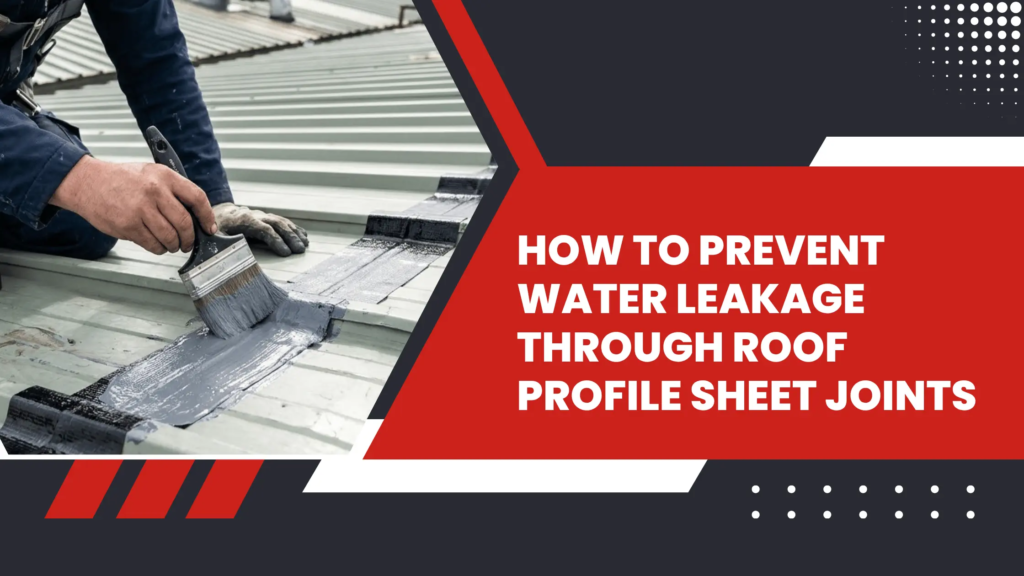
Most roof leaks in metal buildings do not start in the middle of the sheet. They begin where two sheets meet. Roof profile sheet joints are the hardest-working parts of any roof, and in the UAE, they face summer surface temperatures well above 60°C, cool nights, short bursts of heavy rain, and fine dust that settles into every crevice.
Here’s why joints fail and how to seal them correctly.
Why Do Joints Fail?
Roof sheets are designed to shed water quickly, so a junction can only withstand what is pushed or drawn into it. Four things usually accomplish this.
- Thermal movement: Steel expands about 12 millionths of its length per degree Celsius; a 10 m sheet heated to 50°C grows about 6 mm. Aluminum moves approximately twice as much.
- Capillary action: Water seeps through tight overlaps, even uphill.
- Wind-driven rain: It travels across laps that remain dry in calm air.
- Fastener failed: Over-driven screws shatter the washer, whereas under-driven screws leave a gap.
Profile and Pitch: How Does Each Type of Roof Profile Sheet Behave?
Different types of roof profile sheets behave differently at the lap:
- Corrugated metal sheets have rounder waves and require a larger side overlap, typically one and a half corrugations or more on low pitches.
- Trapezoidal sheets overlap on one rib and often feature a groove that disrupts the capillary route. Manufacturers often specify a minimum pitch of 5 degrees and longer end laps of less than 15.
The roof profile sheet installation guide for your unique profile takes precedence over any general rule of thumb.
How to Prevent Roof Sheet Joint Leakage
Roof profile sheet joint waterproofing solutions need to be professional, and you decide whether you chose the right one on the day of installation.
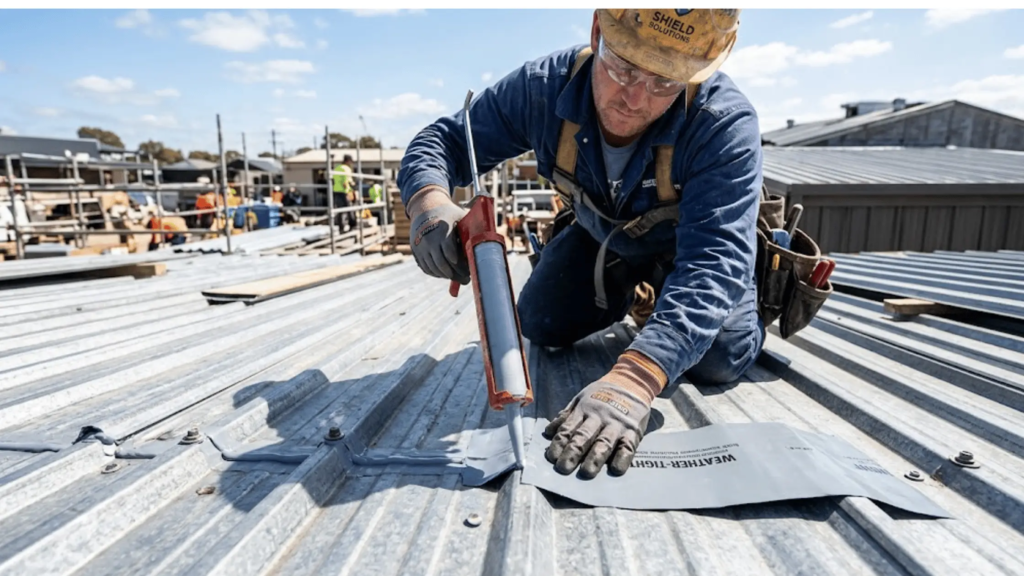
- Before closing the sheets, apply butyl tape along the side laps. It never hardens, so it keeps moving with the metal.
- To maintain the tape compressed, drive stitching screws along the lap at regular intervals of 300 to 500 mm.
- Use the manufacturer’s end lap, which is typically 150 mm on steeper roofs and 200 to 300 mm on lower pitches, with a continuous tape line across it.
- Choose fasteners with bonded EPDM washers and cease driving once the washer is flat.
- Install profile-matched closures and flashings at the ridge, eaves, and walls. Even those junctions are joints.
What is the Best Way to Seal Joints in Metal Roofing Sheets?
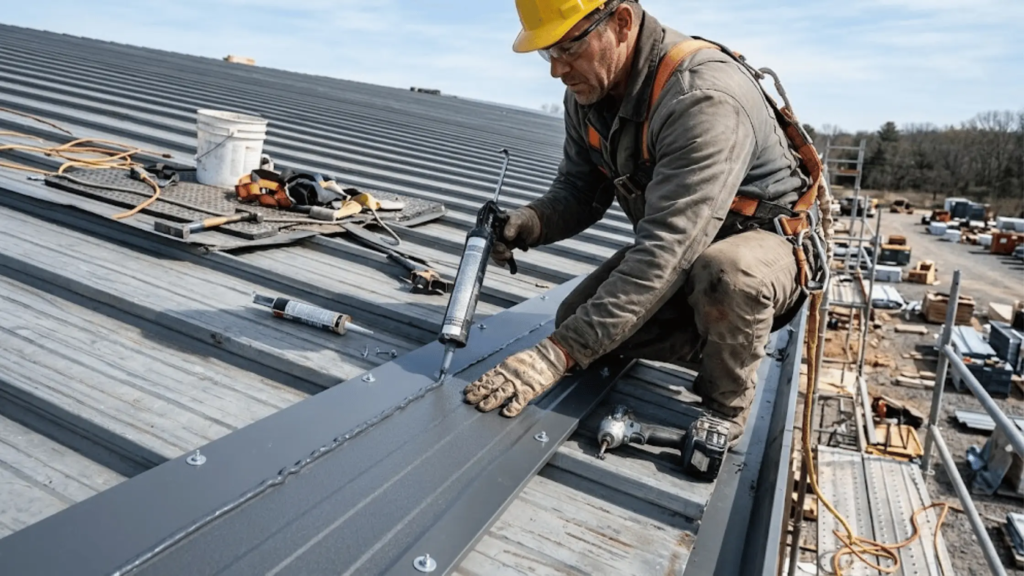
Start with butyl tape for the lap, then secure it tightly with stitching screws. To wrap things up, apply a neutral-cure silicone or polyurethane sealant to the cut ends and fastener heads.
Make sure to avoid acetic-cure silicone, the one that has that vinegar smell, because it can damage zinc-based coatings. For waterproofing solutions, you can choose from 3 main types of sealants:
- tapes,
- gunned sealants,
- and liquid membranes.
The liquid membranes are particularly effective for older roofs where laps can’t be reopened. Just remember, relying solely on sealant is more of a patch job than a thoughtful design choice.
How Do You Stop Water Leaking through Roof Sheet Joints?
You need to track down the source of the leak. Water usually flows along the purlins and the underside of the sheets before it drips down, so the stain might not be directly under the leak. To pinpoint the issue, spray the roof starting from the lower edge and work your way up, section by section, while someone watches from inside.
Once you find the leak, clean the overlapping areas, replace any worn-out washers, and seal everything up with a neutral-cure product. If movement has caused the laps to open, add stitching screws for good measure.
Corrosion at the Lap: How to Handle It?
A lap can trap a thin film of moisture and dust that hardly dries out, which means that joints are prone to rusting before the open sheet does. Fortunately, simple corrosion-resistance techniques can help.
For example, you should touch up any cut edges with compatible paint, use stainless or coated fasteners, and keep different metals separated. This is crucial because aluminum against bare steel or copper can trigger galvanic corrosion.
Roof sheet coating types also matter. Galvanized steel uses zinc, while zinc-aluminum coatings often last longer in various environments, and pre-painted sheets offer an additional protective layer.
If you’re near the coast, ask about coating specifications, not just the color.
How to Choose the Right Roof Profile Sheet: Buying with Leaks in Mind
Choosing the right roof profile sheet begins with considering the span, pitch, and wind exposure. Then look at the base metal thickness, the coating, and any included accessories. It’s a smart move to order the longest sheets you can transport and lift, since fewer end laps mean fewer joints to worry about during maintenance.
When doing a cost analysis of roof profile sheets in the UAE, remember to factor in repairs and downtime, not just the price per sheet. It’s common to make mistakes when buying roof profile sheets in the UAE, often because buyers focus solely on price without considering thickness and coating, or they forget to include matched tape and fasteners.
If you’re looking for a roofing sheets supplier in the UAE, don’t hesitate to reach out to a supplier, especially one that deals in corrugated sheets. It’s a good idea to ask them about lap recommendations and cut-to-length options.
Keep in mind that house roofing sheets for carports and extensions usually have a low pitch, so those same questions apply there too.
Conclusion
Preventing water leakage through roof profile sheet joints starts with proper installation, suitable sealing materials, and regular maintenance. Choosing the right roof profile and following simple maintenance tips for roof profile sheets, such as checking fasteners, cleaning overlaps, and inspecting sealants regularly, can also extend your roof’s lifespan and prevent unexpected damage.
Whether you need roof profile sheets for industrial buildings or housing units, paying attention to joint waterproofing can save costly repairs.
When sourcing materials, work with reliable corrugated sheet suppliers in the UAE who understand local weather conditions. Emirates Portacabin can help businesses explore suitable roofing solutions for their project requirements.
FAQs
How often should metal roofing sheet joints be inspected?
Inspect roof joints at least twice a year, preferably before and after the rainy season. Also, check them after severe weather.
Can roof sheet joints be repaired without replacing the entire sheet?
Yes, you can often repair minor leaks with suitable sealing tapes or sealants. However, severely corroded or damaged sheets may require replacement.
What causes roof sheet joints to leak after installation?
Common causes include incorrect overlaps, loose fasteners, damaged washers, and poor sealing. Thermal movement and heavy wind-driven rain can also worsen leakage.