

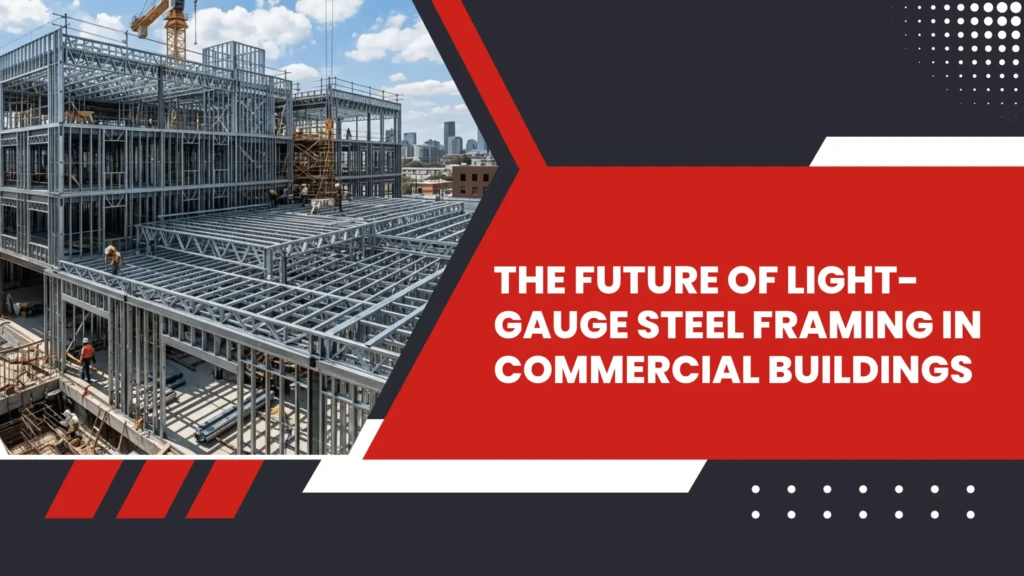
Heavy hot-rolled framing is often time-consuming, while light-gauge steel can make it much faster. Besides, light-gauge steel construction offers more environmental benefits. So, many projects are now built using this type of framing.
Previously, we explored the benefits of light-gauge steel construction and discussed some common myths about light-gauge steel. Today, we will look at the future of light-gauge steel framing in commercial buildings, including emerging technologies, innovative solutions, and the trends shaping modern construction.
Let’s explore what’s ahead!
How Light-Gauge Steel Buildings are Made
The steel coil is coated with zinc and then fed into roll-forming machines which, at room temperature, shape it into C, Z and U sections. Each piece is cut to size and holes punched by computerized equipment.
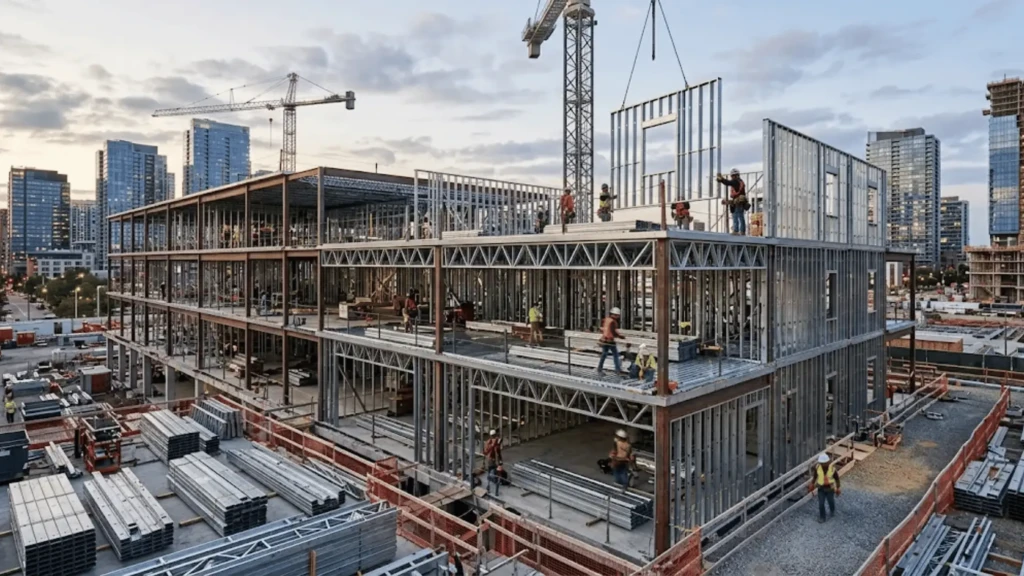
Each member is labeled and sent to site, where crews bolt or screw it together. As most of the work is done in a factory, parts of a framing arrive pre-measured, meaning less waste and re-working on site.
Future Trends in Light-Gauge Steel Framing in Commercial Construction
According to a reputable modular steel building manufacturer in the UAE, most of the change is taking work away from the construction site.
A number of trends are already visible:
- More Pre-fabrication: Frames are cut, punched, and labeled in the factory and then assembled on site. For example, a shed that once required weeks of site work can be erected in days.
- Solar-ready Roof:The roof of some buildings is a large, unshaded surface. This is cheaper than reinforcing a roof later on, so more and more developers are asking for frames designed to carry panels from the get-go.
- EV Charging Built-in: If the framing is for parking sheds, it can now have charging points. And these points require power runs and mounting locations, so plan the cutting and patching into the frame, and avoid it afterward.
- Low Carbon Steel: Steel is widely recycled, and mills using electric arc furnaces and more scrap produce steel with a smaller footprint. Buyers are beginning to specify this.
- Buildings That are Movable or Expandable: The frames are bolted together and can be unbolted, allowing the shade structure to grow with a development or move with a tenant.
Not every trend is right for every project. Yes, you get light-gauge steel design flexibility, but it still has to be designed in advance to take the weight and wind load of the solar panels (if needed). You can’t implement it later without reinforcement.
Innovations in Light-Gauge Steel Framing Technology
The most useful innovations aren’t always the flashy ones. Design software can now generate fabrication files directly, turning a drawing into machine instructions without anyone having to re-enter the dimensions.
That cuts out a common source of mistakes: a wrong number on the cut list can mean the wrong part arrives on site.
Roll-forming lines have improved, too. Modern machines can switch quickly between section sizes and punch bolt holes, service openings, and identification marks in a single pass. As a result, custom designs cost less to produce than they used to, when every change required a lengthy machine setup. So, you can also count on the cost efficiency of light-gauge steel.
Coatings have improved as well. In many environments, zinc-aluminum-magnesium coatings offer better corrosion resistance than standard galvanizing, an advantage at coastal sites and in humid climates. They do cost more, so they’re most worthwhile where structures are exposed to salt air or persistent moisture.
These coating advancements also improve light-gauge steel fire and weather resistance. However, appropriate fire protection systems and material specifications remain essential depending on the building’s location and intended use.
Robotics is another recent development. Some factories now use automated systems to assemble wall panels and trusses. While this is more common in building-frame production than shed manufacturing, the same equipment can make shed components consistently and to tight tolerances.
How will Light-Gauge Steel Framing Shape the Future of Commercial Buildings?
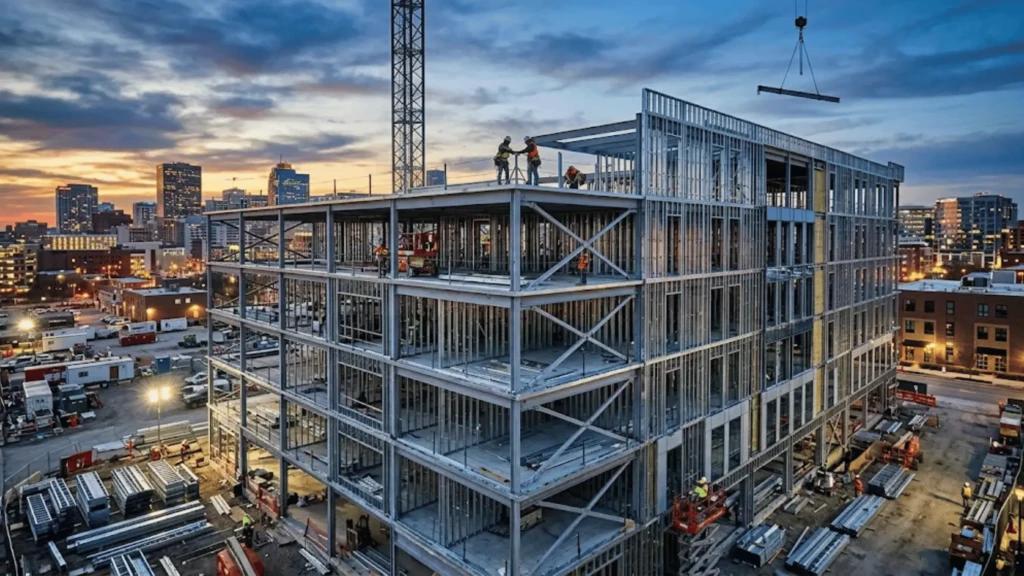
Predictability is the biggest advantage. Factory-made parts make delivery dates more dependable and costs easier to pin down. With most of the work done indoors, weather delays, often a headache on open sites, have less impact.
When comparing light-gauge steel vs. traditional construction, light-gauge steel stands out for faster installation, less material waste, and greater flexibility, making it a practical choice for many modern commercial projects.
Steel framing could also shift how owners view a building’s life. Concrete is permanent, for better or worse, while a steel frame can be expanded, reworked, or relocated. If a retailer leases a site for ten years, they could take the shade structure when they leave, or sell it.
Smaller foundations are useful on awkward plots. A lighter frame puts less pressure on the ground, reducing the need for excavation and concrete. On cramped urban sites or where the soil is poor, that can make the difference between a workable project and an impractical one.
There are limits, though. Multi-storey car parks and very long spans still need heavier hot-rolled sections, while enclosed buildings require fire protection that open sheds don’t.
Light-gauge framing is likely to become more common in low-rise and open-sided projects, complementing other materials on larger schemes rather than replacing them.
What are the Latest Technological Developments in Light-Gauge Steel Framing for Commercial Buildings?
A few developments are making a real difference in commercial work today:
- 3D Modeling with Clash Detection: Engineers can spot conflicts, like a beam crossing a drainage line or a light fitting, before anything is cut. It’s much easier to sort out problems on screen than on site.
- Wind Simulation: Software can show how air moves around the roof, helping engineers assess uplift in open structures, where wind can be a particular challenge.
- Part Tracking: Labels and codes identify where each member belongs, so crews spend less time searching and more time installing.
- Solar Panels and Lighting: They can be built right into the mounting system. Frames may come with pre-drilled spots for panels, cable trays, and fixtures.
- Better Corrosion Testing: Suppliers can now share salt-spray and humidity test results for their coatings, giving buyers clear data to compare.
Each improvement saves time or helps prevent mistakes. None is a game-changer on its own, but together they explain why shed projects that took months a decade ago can now be completed in weeks.
Conclusion
The future of commercial construction is moving towards faster, more flexible, and sustainable solutions. Light-gauge steel framing offers several advantages, from reduced construction time and material waste to easier expansion and relocation.
With advancements in technology, the applications of light-gauge steel will continue to grow across commercial projects. Choosing reliable light-gauge steel manufacturers and a well-designed light-gauge steel building system is essential for long-term performance.
Emirates Portacabin helps businesses explore practical steel construction solutions that meet modern project requirements while supporting efficiency, durability, and future growth.
FAQs
Is light-gauge steel suitable for commercial buildings?
Yes, light-gauge steel is suitable for many commercial applications, including offices, retail spaces, and storage structures. Its lightweight design and flexibility make construction faster and more efficient.
How long does a light-gauge steel structure last?
A properly designed and maintained light-gauge steel structure can last for several decades. Its lifespan depends on material quality, protective coatings, environmental conditions, and regular maintenance.
Can light-gauge steel structures be expanded or relocated?
Yes, many light-gauge steel structures use bolted connections that make dismantling and reassembly easier. This makes them suitable for businesses that may need to expand or relocate.